
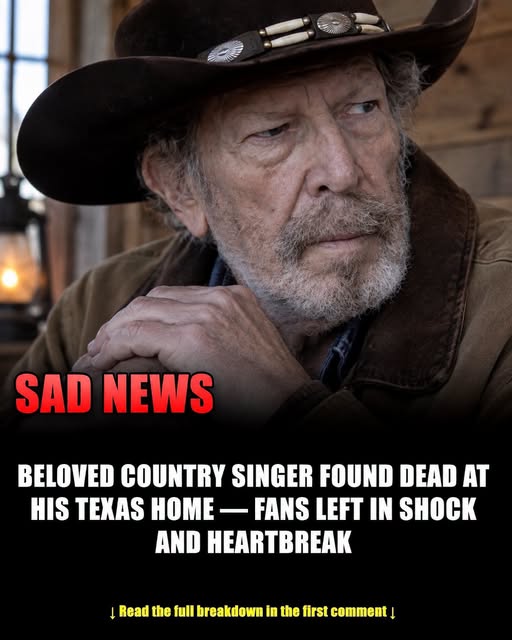
Texas just lost one of the few men who could insult it, challenge it, love it—and somehow make all three feel like an act of devotion.
Kinky Friedman is gone. And with him disappears a rare kind of fearless truth-teller—the kind who refused to behave, refused to fit neatly into a box, and refused to whisper when the truth deserved to be shouted. He sang what others were afraid to say. He joked when the room became too serious. He mocked Texas with one breath and defended its soul with the next.
That contradiction was the magic.
He was a Jewish country singer leading the Texas Jewboys. A satirist who became a mystery novelist. A political candidate who transformed campaigns into something closer to theater, confession, and rebellion. Every label people tried to give him eventually became too small. So he simply broke the label—and kept moving.
Kinky didn’t just write about Texas. He wrestled with it.
He exposed its contradictions, laughed at its sacred cows, challenged its politics, celebrated its characters, and somehow made the entire unruly mess feel strangely beautiful. His relationship with Texas was never blind admiration. It was something deeper: the kind of love that gives you permission to criticize what you refuse to abandon.
And now, what he leaves behind is bigger than nostalgia.
It is permission.
Permission to be difficult. Permission to be ridiculous and profound in the same sentence. Permission to question the people, institutions, and traditions you love. Permission to stand outside the crowd and tell the truth in your own strange voice—even when nobody is asking for it.
His songs will remain. His novels will remain. His outrageous one-liners will keep catching people off guard. And somewhere, another restless soul will discover his work and realize that fitting in was never the assignment.
Texas was already loud before Kinky Friedman.
But because he was here, it became a little stranger, a little funnier—and perhaps a little more honest.