
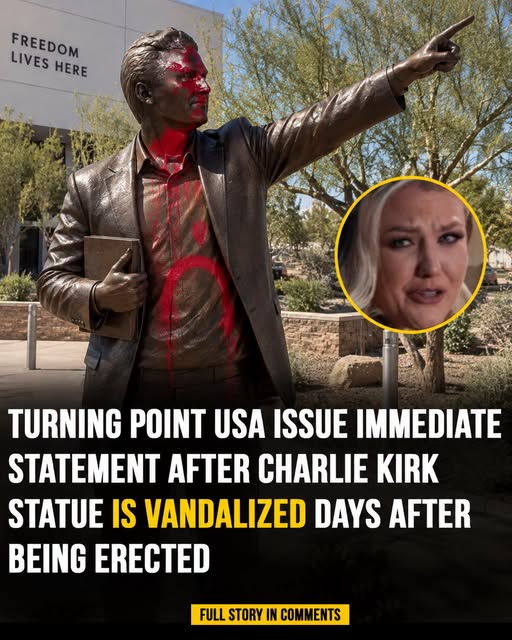
The red paint looked disturbingly like blood.
It streaked across Charlie Kirk’s bronze face only days after his statue was unveiled, transforming what was meant to be a memorial into a scene of anger and confrontation. His name was smeared. The word “Jesus” was violently crossed out beside him. To many, it looked like more than simple vandalism—it felt like an attack on a legacy, a family, and a memory that had barely begun to be honored.
Turning Point USA condemned the destruction as “diabolical,” promising to restore the statue and pursue those responsible. But for Charlie’s widow, Erika, the damage represented something deeper.
She refused to answer hatred with silence.
Instead, she delivered a message of defiance: a bullet could not silence her husband, and neither could a can of spray paint. If anything, every attempt to erase Charlie’s memory would only strengthen the determination of those who believed in what he stood for.
What was intended as an act of destruction became, in her eyes, a moment of testimony.
The vandalism may have scarred bronze, but it could not erase a name, extinguish a belief, or silence a legacy. By ending her response with Scripture and unwavering conviction, Erika transformed grief into resolve—and a damaged memorial into a public declaration that they would not back down.