
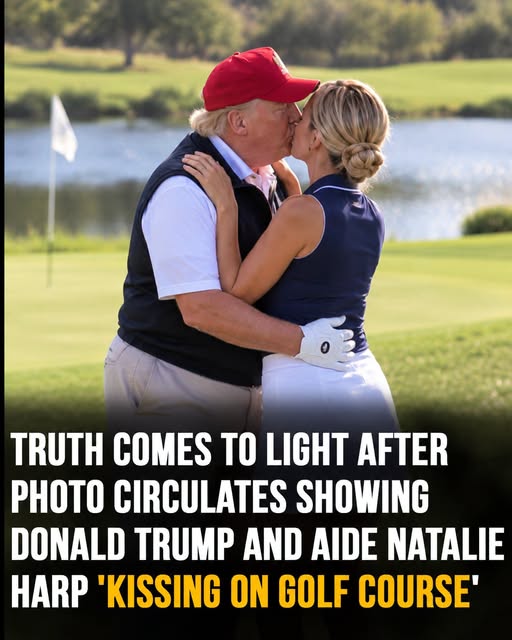
The photograph looked damning: a president, his glamorous aide, and what appeared to be an intimate kiss on a windswept Irish golf course.
Within hours, the image was everywhere. It sparked rumors, fueled speculation, damaged trust, and pulled real people into a scandal that never happened.
Because the photograph wasn’t real.
It was AI-generated—and it had been weaponized.
The viral image allegedly showing Donald Trump kissing White House aide Natalie Harp offers a disturbing preview of how effortlessly artificial intelligence can manufacture “evidence” that looks convincing enough to fool millions.
At first glance, the photograph appeared authentic. That was enough to ignite speculation about Trump’s marriage and Harp’s relationship with the president. Social media users shared it at lightning speed, often without asking the most basic question: Where did this image actually come from?
Then the cracks began to appear.
Online observers and analysts noticed strange details that betrayed the image’s artificial origins. Harp appeared to have a bizarre six-fingered hand. Parts of the background looked warped and unnatural. AI-detection tools also flagged the photograph as likely manipulated.
But by then, the damage had already been done.
The most unsettling part of the story is that Natalie Harp is a real person. She is a close Trump adviser who has accompanied him on public trips, including his recent visit to Ireland. The people, the locations, and the political context were real.
Only the moment itself was fabricated.
And that distinction may become increasingly difficult to recognize.
As AI-generated images become more sophisticated, a photograph can no longer automatically be treated as proof of what happened. A few seconds of hesitation—checking the source, examining the details, looking for independent confirmation—may soon be the difference between discovering the truth and spreading a fiction.
The era of “seeing is believing” may be coming to an end.
And this may be only the beginning.