
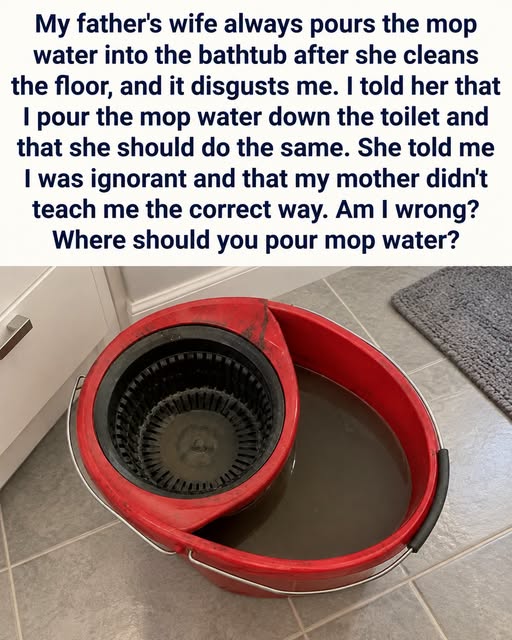
You’re standing there with a bucket full of murky gray mop water, wondering: Toilet or bathtub?
It sounds like a simple household chore, but choose the wrong drain and you could end up with clogged pipes, a filthy tub, or a bathroom floor nobody wants to step onto barefoot.
Here’s the surprising truth: where you dump dirty mop water matters more than you might think.
Dirty mop water isn’t just “used water.” It can contain grit, hair, dust, cleaning chemicals, bacteria, and all the mystery grime you just picked up from underneath your furniture and appliances.
That’s why, for everyday cleaning, the toilet is usually a safer choice than the bathtub.
Toilets are designed to carry waste and suspended solids into a sanitary sewer or septic system. A bathtub drain, on the other hand, is smaller and much easier to clog with hair, dirt, and debris. And there’s another problem: it’s the same surface where people shower, children bathe, and pets may get cleaned.
Dumping mop water into the tub means you’ll need to thoroughly scrub and disinfect it before anyone uses it again. Otherwise, you could be leaving behind a layer of floor grime exactly where you expect to get clean.
Have a utility or laundry sink? Even better.
That’s what these sinks are designed for, making them the most convenient option for disposing of dirty cleaning water. Wherever you pour it, though, strain out hair, chunks, and larger debris first. And be careful with strong cleaning chemicals—especially if your home uses a septic system. Never send chemical-laden mop water into a storm drain or directly into the yard.
There’s also a simple rule of household etiquette: if you’re cleaning in someone else’s home or a shared space, ask first. Different homes have different plumbing setups and house rules.
So, when that bucket of dirty mop water is staring back at you, remember:
Utility sink first. Toilet second. Bathtub only when necessary.
And one more rule worth remembering: never use the kitchen sink for dirty mop water, and don’t dump cleaner-filled water onto the yard or into a storm drain.
A tiny decision at the end of cleaning can make a surprisingly big difference to your plumbing—and your hygiene.