
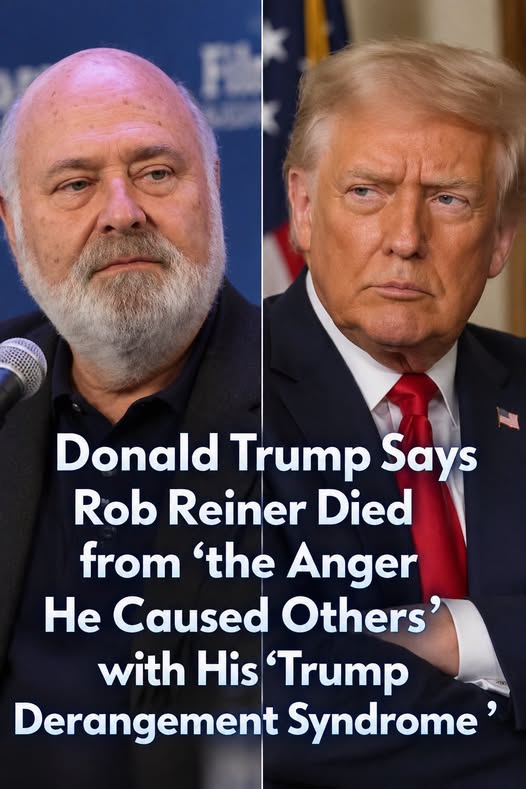
The Viral Claim That Set the Internet on Fire
The internet erupted.
A shocking remark allegedly attributed to Donald Trump about filmmaker Rob Reiner raced across social media, spreading with astonishing speed. Within hours, outrage, confusion, and morbid curiosity collided as users shared the claim, debated its meaning, and reacted to something that, at the time, no one could actually prove was real.
There was no verified source. No official confirmation. No credible evidence.
Just a viral claim growing louder with every share.
The controversy surrounding the alleged Trump remark offers a striking glimpse into how easily truth can become blurred in the digital age. A provocative statement, detached from its original context—or potentially fabricated altogether—can travel thousands of miles before anyone pauses to ask the most important question: Is it true?
As the story spread, speculation gradually began to look like fact. For some, the allegation became another example of what they viewed as reckless political rhetoric. For others, it was evidence of how easily words can be distorted, manipulated, or taken out of context. Each side found reasons to believe what already fit their expectations.
And somewhere in the middle, verification was left behind.
That may be the most important lesson of the entire episode. In an age where outrage travels faster than evidence, a single unverified sentence can become a headline, a talking point, and eventually—if repeated often enough—a supposed fact.
The story isn’t simply about Trump or Reiner. It’s about all of us.
It is about how quickly we react, how readily we share, and how easily emotion can overpower skepticism. Before the next sensational claim sweeps across our feeds, perhaps the most powerful response is also the simplest:
Stop. Check. Verify.
Because once misinformation goes viral, correcting it is rarely as easy as spreading it.