
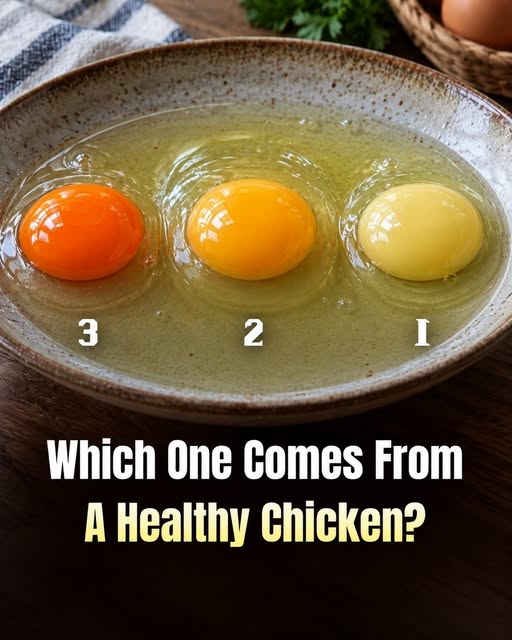
That rich, golden-orange egg yolk you proudly pay extra for? It may not mean what you think.
For years, we’ve been conditioned to believe that the deeper the yolk, the healthier and more nutritious the egg. But here’s the surprising truth: color can be deceiving.
A deep orange yolk doesn’t automatically mean a healthier hen, a cleaner farm, or a more nutritious egg. In many cases, it simply reflects what the hen has been eating.
Yolk color is largely influenced by carotenoids—natural pigments found in foods such as grass, alfalfa, corn, and marigold petals. These can naturally create that beautiful orange hue. But specific pigments can also be added to feed to produce a yolk that looks richer and more appealing.
So, is a darker yolk actually healthier?
Not necessarily.
Whether an egg has a pale yellow yolk or a striking sunset-orange center, many of its core nutrients—including protein, vitamin B12, vitamin D, selenium, and choline—can remain quite similar.
What matters more is what you can’t see just by cracking the egg open: the quality of the hen’s feed, the conditions in which she was raised, farm hygiene, handling, storage, and ultimately, how fresh the egg is.
The color may catch your eye—but it doesn’t tell the whole story.
The next time you see a beautifully orange yolk, don’t just ask, “Why is it so bright?”
Ask the more important question:
“What actually went into producing this egg?”