
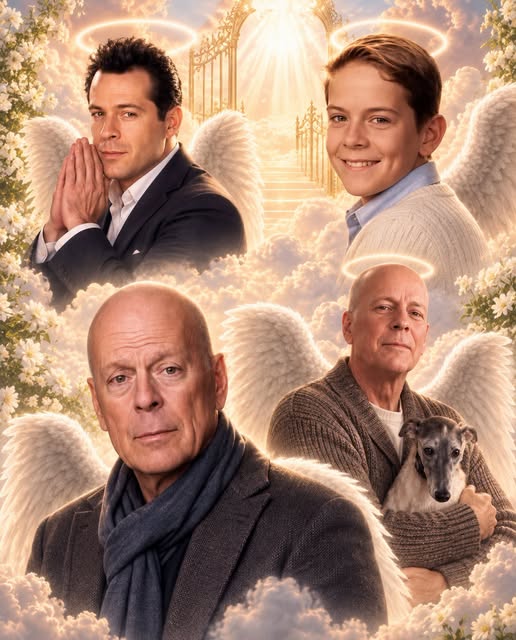
He bled on broken glass for us, took impossible hits, and somehow always found a way to get back up. We came to believe he always would.
But even the toughest heroes are human.
The man who turned “Yippee-ki-yay” into a battle cry is now living a very different chapter of his life. Bruce Willis, once a constant presence on our screens, has stepped away from the spotlight following his diagnosis of frontotemporal dementia. And as fans look back, we’re not just remembering a movie star—we’re remembering a piece of our own lives.
We didn’t simply watch Bruce Willis. We grew up with him.
From the sharp, mischievous charm of Moonlighting to the battered determination of John McClane, Willis gave us heroes who weren’t perfect. They were exhausted. They were scared. They got hurt. They limped, bled, stumbled—and still kept moving forward.
That was his magic.
In a Hollywood built around larger-than-life invincibility, Bruce Willis made vulnerability look heroic. He showed us that courage wasn’t about never being afraid or never getting knocked down. Sometimes, courage was simply finding the strength to stand up one more time.
His later years have reminded us of something his movies often did, too: even the strongest among us need love, family, and someone beside them.
His family’s commitment and unity have brought a deeply personal struggle into the public eye—not as a spectacle, but as a reminder of compassion, dignity, and being present for the people we love.
And perhaps that is the most fitting legacy of all.
Because long after the red carpets are gone, the interviews have ended, and the lights of Hollywood have dimmed, someone somewhere will press play on Die Hard, The Sixth Sense, Pulp Fiction, or Moonlighting.
They’ll hear that familiar voice.
They’ll see that familiar face.
And for a few hours, Bruce Willis will be right there again.
Bruised. Breathless. Determined.
Still standing.
And that’s why Bruce Willis will never truly disappear.