
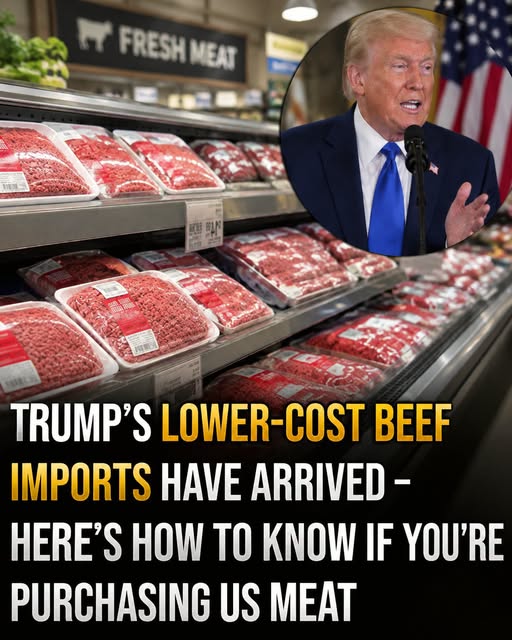
The label on your burger may not mean what you think it means anymore.
You see three familiar words: “Product of USA.”
They sound simple. Reassuring. Almost like a guarantee that the beef came from American cattle.
But behind that little label is a regulatory change that most shoppers never heard about—and it could completely change how you understand the meat sitting on your plate.
The controversy begins with a quiet technical shift in federal labeling rules. Under the updated framework, beef from cattle raised and slaughtered outside the United States can, under certain circumstances, undergo processing in an American facility and still carry a U.S.-related origin claim.
And that creates a startling distinction.
Processed in America does not necessarily mean raised in America.
For a shopper standing in the grocery aisle, those details can be easy to miss. The package may look unmistakably American, while the animal’s journey began thousands of miles away.
For U.S. cattle ranchers, the change has fueled concerns about competition, transparency, and whether American-produced beef is being fairly distinguished from imported cattle.
For consumers, it raises another question:
When a label says “Product of USA,” exactly what are you being promised?
Because the difference between where an animal was raised and where its meat was processed can be enormous.
And when that difference is hidden behind a few familiar words on a package, the real story isn’t just about beef.
It’s about how much you actually know about the food you’re buying.