
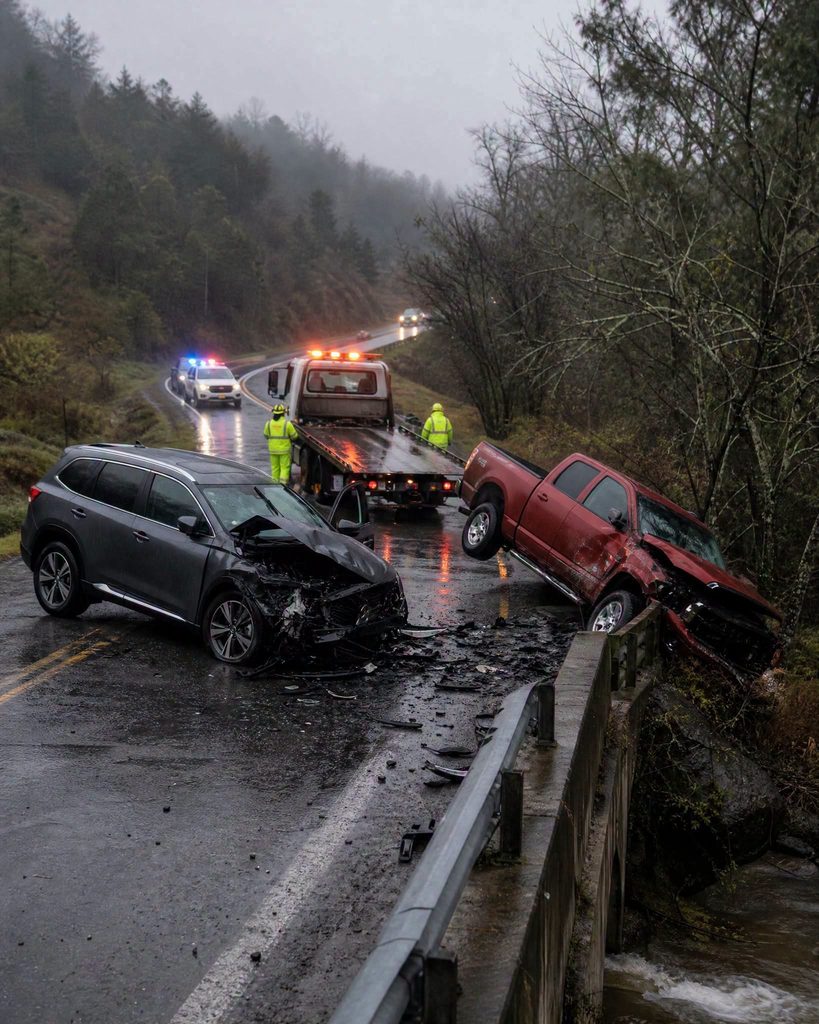
The screams disappeared into the darkness.
On a remote stretch of Brazil’s BR-251, an ordinary journey home turned into an unimaginable tragedy.
Near kilometer 446, close to the rural community of Barrocão in Grão Mogol, a van carrying workers back toward Ceará collided head-on with an empty heavy-haul truck traveling in the opposite direction toward Rio Grande do Sul.
The impact happened in seconds.
The consequences will last forever.
Both vehicles were thrown from the roadway into difficult terrain, where darkness, rain, and twisted metal transformed the rescue operation into a desperate race against time.
Firefighters, SAMU medical teams, federal highway police, and forensic personnel battled the conditions to reach those trapped inside the wreckage. Hydraulic rescue equipment was used to cut through the crushed metal—freeing those who could still be saved and recovering those who could not.
Nine people inside the van lost their lives at the scene. Among them was a child.
Eight others were injured, including another child and a man reported to be in critical condition. The two people traveling in the truck survived with minor injuries.
But long after the wreckage is cleared and the road is reopened, the deepest consequences will remain far from the highway.
They will be felt in empty chairs at family tables.
In unanswered phone calls.
In homes where someone who was expected to return simply never will.
Investigators are examining tire marks, weather conditions, the roadway, and other factors that may help explain how the collision occurred. Yet the tragedy has also renewed attention on BR-251, a highway long associated with deadly crashes and known locally as the “road of death.”
Heavy traffic, dangerous curves, vulnerable infrastructure, and years of calls for improvements have made the highway a recurring source of concern.
And behind every statistic is a family.
Nine lives were lost in a matter of seconds.
Nine stories were abruptly cut short.
For the families left behind, answers may explain what happened—but answers alone cannot bring their loved ones home.
What they need now is more than mourning. They need change, so that another family doesn’t have to receive the same devastating call.