
The clock was running out.
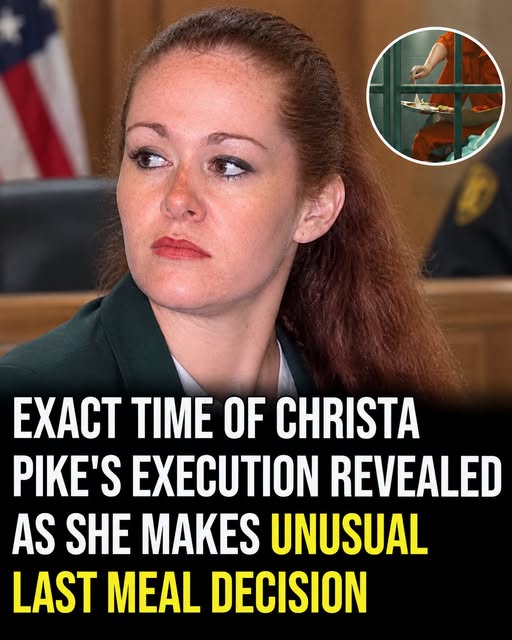
With her execution drawing closer, Christa Pike made a decision that stunned those watching from the outside. She refused her last meal.
No favorite food. No comfort dish. No final request carefully chosen before the state takes her life. Just a simple refusal.
Inside Tennessee’s Riverbend Maximum Security Institution, that decision carries a weight far greater than a meal. For decades, the last meal has remained one of the most haunting rituals surrounding executions—a final moment when a condemned prisoner is allowed to choose something ordinary, personal, and deeply human.
Pike chose nothing.
As the final hours disappear, that silence becomes almost louder than words. She is not asking for comfort. She is not reaching for one last taste of normal life. Instead, she appears to be facing the machinery of execution without making a final request from it.
But behind that stark decision is a case that has haunted Tennessee for nearly three decades.
Christa Pike was convicted in the 1995 murder of Colleen Slemmer, a crime marked by extraordinary brutality. Yet Pike’s own history has also remained central to the debate surrounding her sentence, including allegations of childhood abuse and long-running arguments over trauma, youth, mental illness, and personal responsibility.
Now, as Slemmer’s loved ones wait for the justice and closure they have sought for years, Pike approaches the final hours of her life.
No special meal.
No final comfort.
Just a clock moving relentlessly toward the moment when there will be nothing left to decide.
And in that silence, one of America’s oldest questions becomes impossible to escape:
Where does justice end—and where does mercy begin?