
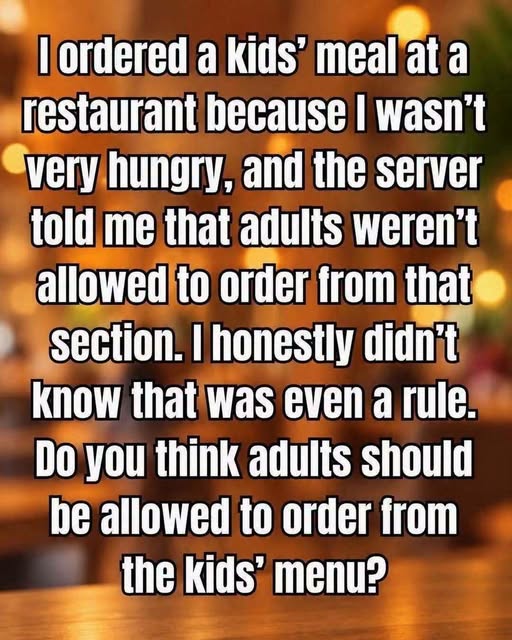
A Simple Request for a Smaller Meal Turns Into an Unexpectedly Awkward Restaurant Encounter
All they wanted was a smaller meal—but the answer was an uncomfortable reminder that even a simple food order can become a source of embarrassment. For adults who prefer the children’s menu, what seems like a reasonable request can quickly turn into an awkward exchange, especially when restaurant policies stand between them and an affordable meal. Suddenly, a personal choice about appetite and budget becomes a debate about fairness, leaving one question hanging in the air: Should ordering less really have to feel so uncomfortable?
Children’s menus often appeal to adults for understandable reasons. Some people simply have smaller appetites, while others want to enjoy a quick, inexpensive lunch without paying for a full-sized entrée they may not finish. Yet many restaurants reserve these meals exclusively for children, arguing that their lower prices are designed around younger customers and specific business costs. From the restaurant’s perspective, the restriction may make financial sense. But from the customer’s side, being told they cannot order a particular meal can feel unnecessarily humiliating, especially when money is tight or food waste is a concern.
The solution may not be to remove every restriction, but to give customers more choices. Half-portions, smaller entrées, and reasonably priced small plates could offer a practical middle ground. Restaurants could maintain their profit margins while giving adults the freedom to order according to their appetite and budget. After all, not everyone wants—or needs—a full-sized meal, and that should not become a reason for an uncomfortable confrontation.
A smaller appetite should never mean a bigger helping of embarrassment. With a little flexibility and thoughtful menu planning, restaurants could make dining more welcoming for everyone without compromising their business needs. Sometimes, the best solution is simply giving people the freedom to choose how much they want to eat—and how much they want to spend.