
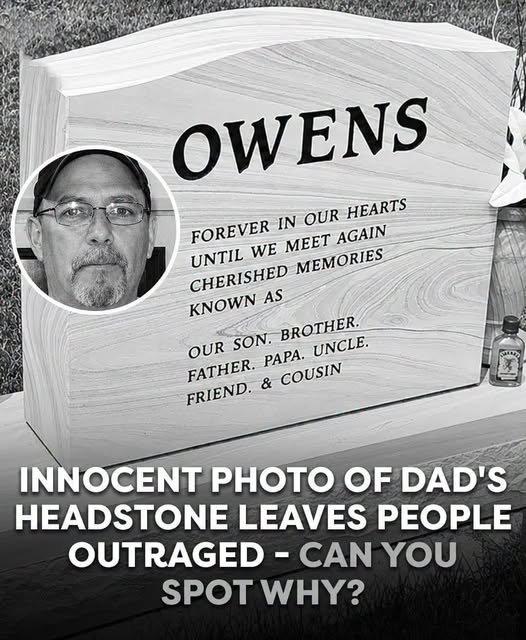
A quiet grave became the unlikely center of a bitter dispute—not over money, property, or inheritance, but over one final joke.
Hidden within the epitaph on Steven Paul Owens’ headstone was a message that most visitors would never notice. The first letters of each line formed a profanity, creating a private acrostic that his family said was no accident. To them, it was unmistakably Steven: a final glimpse of his humor, personality, and the kind of inside joke he would have appreciated.
But when the hidden message was discovered and shared online, something deeply personal suddenly became a public controversy.
Some people called the inscription inappropriate and disrespectful, arguing that a cemetery is a shared and sacred space. Others saw something completely different—a family honoring their loved one exactly as he was, rather than turning his memory into something polished and unfamiliar.
Cemetery officials reportedly wanted the inscription changed, raising concerns about offensive language and the fact that children and other visitors could encounter it. But supporters pushed back, questioning whether a public memorial should be required to conform to everyone else’s idea of what is acceptable.
At the heart of the dispute was a much deeper question:
When someone dies, who gets the final say over how they are remembered—the people who knew and loved them, or the strangers who have to look at the memorial?
For Steven’s family, the hidden message wasn’t an insult. It was a goodbye in his own language—a final joke that made the headstone feel unmistakably like him.
And perhaps that is what made the controversy so uncomfortable: beneath the debate over a few letters was a much more personal struggle over whether a person’s individuality should survive them—even when that individuality doesn’t fit neatly into society’s expectations of what a memorial should be.