
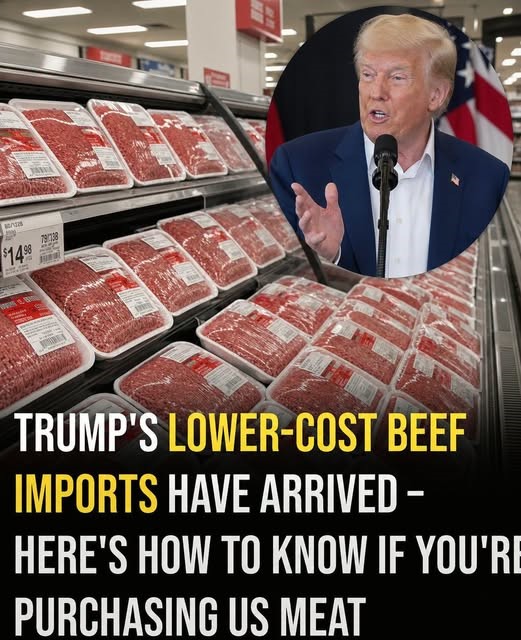
The label on your burger may have changed — and almost nobody noticed.
While Americans are watching beef prices climb and cattle supplies tighten, a major change in the beef market is happening quietly behind the scenes.
And the most important clue may be hiding in plain sight: the words printed on your package.
Many shoppers see a USDA inspection mark and assume the beef came from American cattle. But a USDA inspection or quality grade does not automatically tell you where the animal was born or raised.
That’s where the label matters.
Under USDA rules, the voluntary claims “Product of USA” and “Made in the USA” carry a specific meaning: for single-ingredient meat products, the animal must have been born, raised, slaughtered, and processed in the United States.
But other wording can tell a very different story.
Terms describing where beef was processed, packaged, or handled do not necessarily mean the cattle themselves were American-born and American-raised. And labels such as “USDA Prime” or “USDA Choice” describe the meat’s quality grade — not its country of origin.
That means the difference between a truly U.S.-origin claim and a more limited processing claim can come down to just a few words on a crowded package.
So before you put that burger in your cart, look beyond the USDA stamp.
Check the origin language.
Because when it comes to beef, the smallest words on the label may tell the biggest story.