
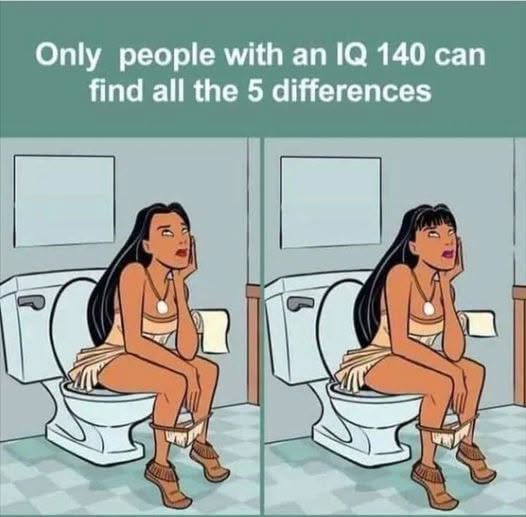
Can You Spot All 5 Differences? This Tricky Puzzle May Test Your Focus More Than You Think!
One seemingly simple puzzle can leave even the sharpest eyes feeling defeated. You study two nearly identical pictures, convinced you can spot every change, until one tiny detail refuses to reveal itself. Then comes the bold claim that only people with an IQ of 140 can solve it. But before you question your intelligence, there is something important you should know: this popular challenge may not measure what you think it does.
Spot-the-difference puzzles have a unique way of capturing our attention. At first, the images look almost identical, but the longer you stare, the more frustrating the search becomes. A missing object, a slightly different color, or a subtle change in the background can hide in plain sight. These challenges can be entertaining and satisfying, but claims that solving them proves genius have no solid scientific basis. A pair of edited pictures cannot determine your IQ. Formal intelligence tests use standardized tasks, carefully developed methods, and validated scoring systems.
So why can such a simple game feel surprisingly difficult? The answer lies in how your brain processes visual information. Instead of examining every detail individually, your mind often focuses on the overall scene. That makes it easy to overlook a small change, especially when the images contain similar shapes, repeated patterns, or distracting details. Fatigue, interruptions, time pressure, and even viewing the puzzle on a small screen can make the challenge harder.
Want to improve your chances of finding every difference? Slow down and use a systematic approach. Divide the pictures into sections and compare each area one at a time. Pay close attention to colors, shapes, edges, shadows, spacing, and objects that appear more than once. If a detail continues to escape you, enlarge the images or step away for a brief break before trying again.
The real secret is that these puzzles reward patience and careful observation more than any magical measure of intelligence. Practice may help you become more efficient, but missing a difference does not mean you lack intelligence, and finding them all does not prove you are a genius.
Enjoy the challenge, test your observation skills, and invite your friends to try it too. After all, the most interesting part of the puzzle may not be how many differences you find, but how easily a tiny detail can fool the human eye.