
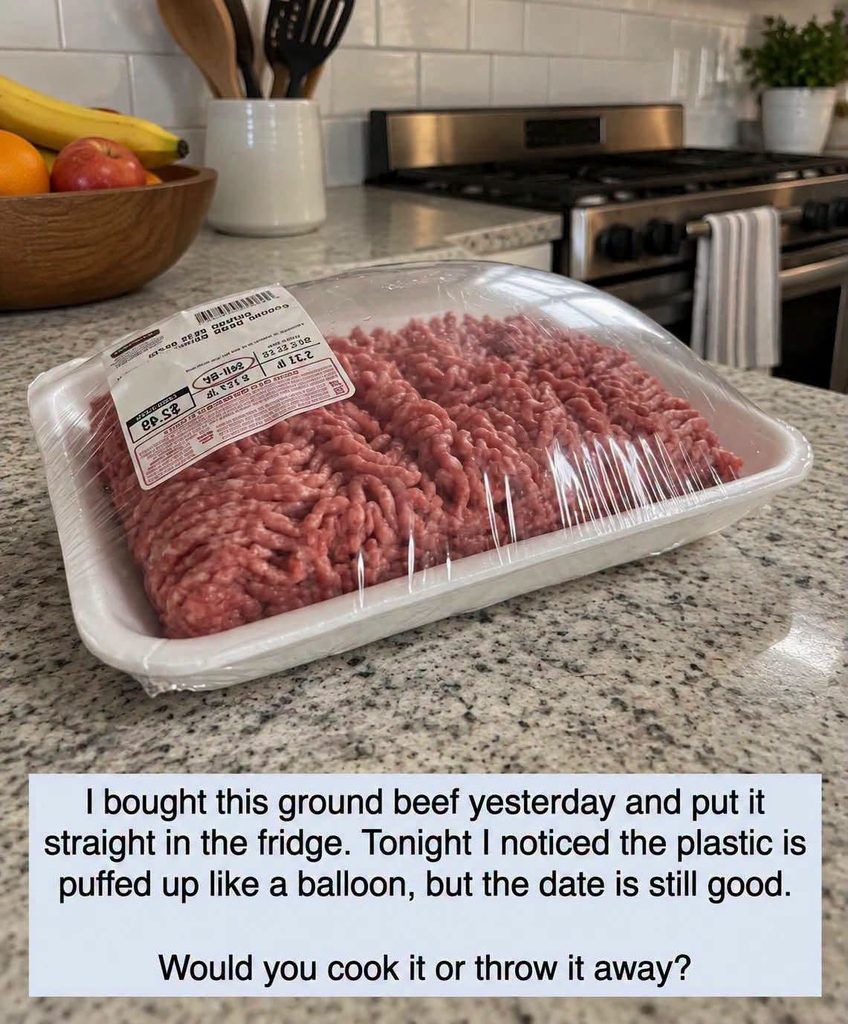
A Swollen Food Package Could Be Hiding a Serious Warning—Here’s What You Need to Know
That oddly swollen package sitting in your refrigerator might be more than a harmless packaging issue. While some foods are intentionally sealed with protective gases to preserve freshness, unexpected bulging can signal something far more concerning: spoilage that may not be obvious at first glance. And before you open the package or take a single bite, there is one important fact to remember: food that looks or smells normal is not always safe to eat.
Not every puffed-up package is a reason to panic. Potato chip bags, for example, often contain nitrogen to protect their contents from damage and help maintain freshness. Some refrigerated foods also use carefully controlled gas mixtures to slow spoilage. The real concern begins when a package becomes unusually swollen, especially if it has changed shape while sitting in storage.
In certain cases, bacteria and other microorganisms can produce gas as they grow inside food. This can cause packaging to expand, turning an ordinary-looking product into a potential warning sign. Bulging cans are particularly concerning because certain foodborne hazards can exist without obvious changes in smell, color, or taste. Never assume that a can is safe simply because its contents appear normal.
So, what should you look for when shopping? Avoid refrigerated packages that are unexpectedly swollen, leaking, damaged, or no longer properly sealed. Be especially cautious with cans that bulge, leak, have deep dents near their seams, or show significant rust. These warning signs do not prove that contamination is present, but they are serious enough that the product should not be purchased or consumed.
Once you bring groceries home, proper storage matters just as much. Keep perishable foods refrigerated at 40°F (4°C) or below, follow the manufacturer’s storage instructions, and remember that expiration or best-before dates are not absolute guarantees of safety. If a package looks suspicious, resist the temptation to open it for a closer inspection or taste a small amount to see whether it is still good.
When a can is bulging, do not open, puncture, or taste its contents. Follow local food-safety guidance for safe disposal, and avoid handling leaking or damaged containers unnecessarily.
It may be frustrating to throw away food you have already paid for, but the cost of replacing a questionable product is small compared with the potential consequences of foodborne illness. When it comes to suspicious packaging, trust the warning signs—not your nose. A few seconds of caution could help protect you and your family from a risk that is not always visible.