
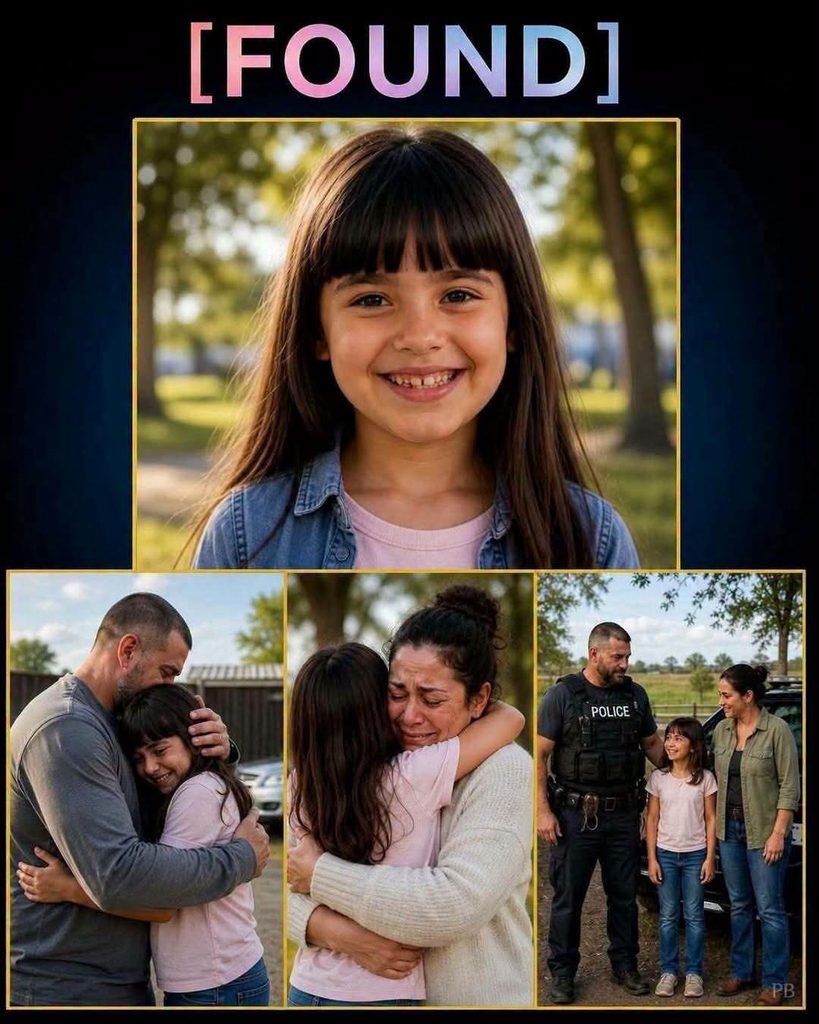
The child was found alive. For a community that had spent days searching ditches, scanning roads, sharing photographs, and refusing to give up hope, the news should have been the ending everyone had prayed for.
But sometimes, finding someone is only the beginning.
The relief of a safe return cannot erase everything that happened before it. Behind closed doors, a quieter and far more difficult journey begins—one that cannot be measured by headlines, answered questions, or the public’s desperate need to know what happened.
Survival is not the same as recovery.
Now, the child needs something the outside world cannot provide: time, safety, stability, and the freedom to heal without being watched. Trained advocates, therapists, investigators, and trusted adults must be given the space to do their work carefully, with the child’s wellbeing and dignity at the center of every decision.
For the neighbors and strangers who searched, shared information, and kept hope alive, this can be difficult to accept. The urgency that once brought everyone together must now become patience. Caring does not mean demanding answers. Concern does not create a right to someone’s story.
The community can still stand beside the child without asking for details. It can refuse rumors, resist speculation, respect boundaries, and understand that privacy is not secrecy—and it is certainly not ingratitude.
The child owes no one a public explanation. No reassuring smile. No interview. No proof that everything is suddenly okay.
What matters now is not satisfying curiosity, but protecting a life that has already endured more than enough.
Sometimes, the most compassionate way to welcome someone home is not to ask what happened.
It is to stop watching.
To give them back their privacy.
And to let them heal, quietly and safely, at their own pace.