
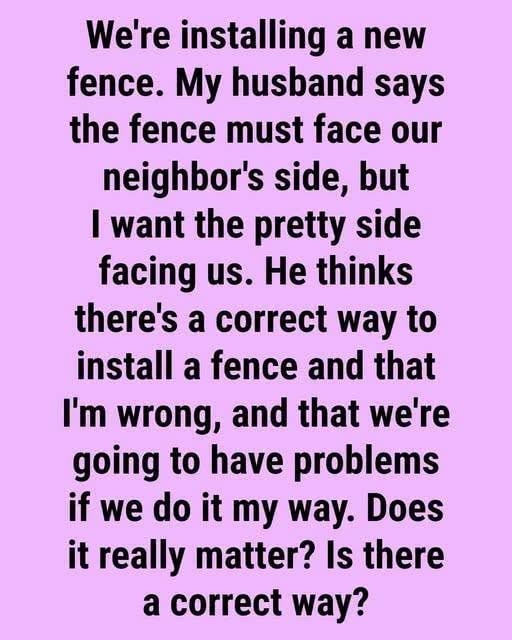
The fight doesn’t start with hammers. It starts with the “good side.”
One neighbor sees a simple gesture of courtesy. The other sees something very different—lost privacy, diminished property value, or even a piece of land that suddenly feels like it belongs to someone else.
And somewhere in between, one seemingly small decision—which way the fence boards face—can determine whether two neighbors enjoy peaceful summers together… or spend years living with quiet, simmering tension.
Most fences are built for privacy, security, and that comforting sense of home. But the direction a fence faces can quietly shape the relationship between the people on either side.
The “finished side” is usually the more attractive face, which is why many homeowners choose to point it toward the street or the neighboring property. In some communities, this is simply an accepted tradition. In others, HOA rules or local regulations can make it a requirement—turning what seems like a minor design choice into a legal one.
But the real turning point happens before the first post ever goes into the ground.
Confirm the property line. Check local regulations. And most importantly, talk to your neighbor.
A five-minute conversation today can prevent years of resentment, unexpected expenses, and even serious boundary disputes tomorrow.
Because a fence doesn’t have to be a symbol of division.
When expectations are clear and both sides show a little respect, a fence can become something much better: a shared understanding that protects privacy while preserving courtesy, trust, and the sense of community you both call home.