
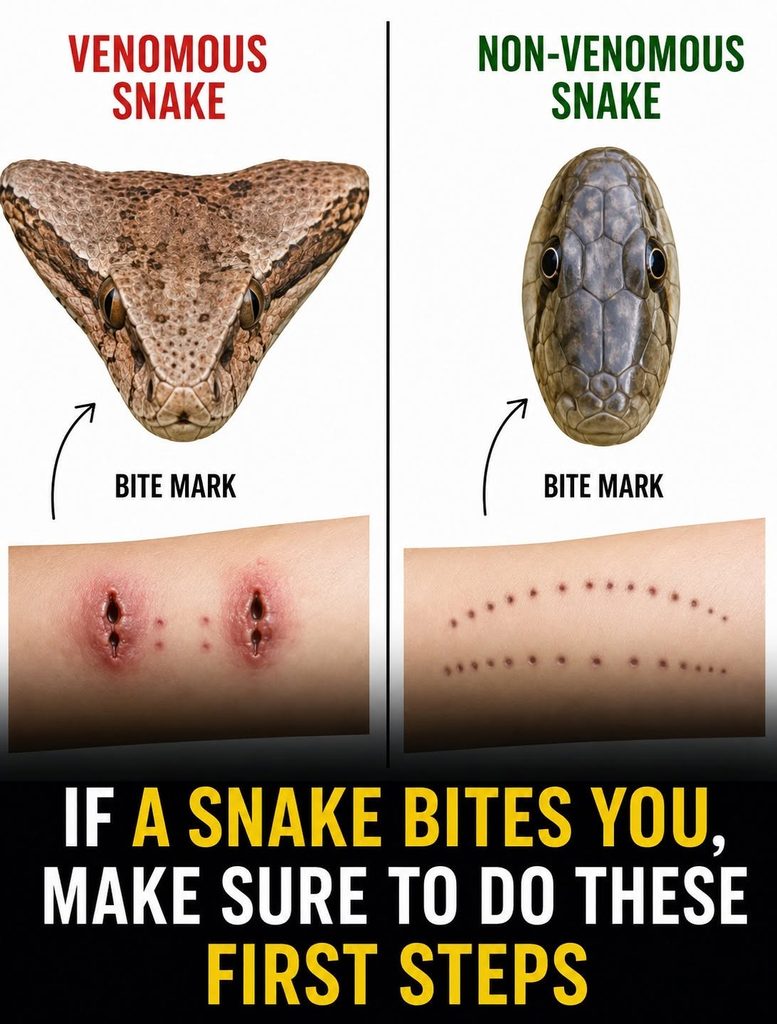
Snake Bite Emergency: 6 Life-Saving First Aid Rules Everyone Should Know Before It’s Too Late
A snake bite can happen in seconds, sometimes without significant pain or obvious warning. Knowing how to respond, what mistakes to avoid, and when to seek emergency medical assistance could make the difference between a manageable medical emergency and a life-threatening situation.
Australia is famous for its extraordinary wildlife, breathtaking landscapes, and vast agricultural regions. However, the country’s natural environment also presents risks that residents, farmers, outdoor workers, and visitors must understand.
Among those risks are encounters with venomous snakes.
For people living or working in rural Australia, seeing a snake is not necessarily unusual. Snakes may move through gardens, hide beneath equipment, shelter near sheds, or cross walking paths during warmer months.
Most encounters end without injury. Snakes generally prefer avoiding humans and will often retreat when given the opportunity.
Unfortunately, bites can occur when someone accidentally steps too close, reaches into an unseen hiding place, or attempts to catch or move a snake.
When this happens, the actions taken during the first few minutes can become critically important.
A person might feel only a slight scratch. There may be little bleeding, minimal swelling, or no immediate discomfort. Yet potentially dangerous venom may already have entered the body.
That is why understanding snake bite first aid should never be considered knowledge reserved only for wildlife experts or medical professionals.
It is an essential safety skill for farmers, gardeners, construction workers, bushwalkers, outdoor enthusiasts, and families living in areas where snakes are present.
The good news is that Australia has effective emergency medical services, established snakebite treatment protocols, and antivenoms for medically significant native snake species.
The challenge is ensuring that people recognize a possible bite, respond correctly, and receive medical attention without unnecessary delays.
Why Snake Bite Awareness Is Especially Important in Australia
Australia is home to numerous snake species, including several capable of causing serious or potentially fatal envenoming.
While the presence of dangerous snakes can sound frightening, it is important to understand that severe snakebite outcomes are relatively uncommon compared with the number of people living, farming, and spending time outdoors.
Nevertheless, the consequences of an untreated venomous bite can be devastating.
The Royal Flying Doctor Service has historically estimated approximately 3,000 snakebites in Australia annually, with around 550 hospitalizations and an average of two deaths per year in the figures it previously reported.
These estimates should be understood as historical figures rather than a verified count for the current year.
A major scientific investigation, the Australian Snakebite Project, examined suspected snakebite cases between July 2005 and June 2015.
Researchers recorded 1,548 patients with suspected snakebites, including 835 who experienced systemic envenoming.
During that study period, 23 snakebite-related deaths were identified.
Although fatalities were uncommon, serious complications included blood-clotting abnormalities, muscle injury, kidney damage, and cardiac arrest.
These findings demonstrate why a seemingly minor injury should never be dismissed without medical assessment.
The seriousness of a snakebite does not necessarily correspond with how dramatic the wound looks.
A tiny puncture mark can sometimes be associated with substantial internal effects.
For rural communities, distance creates another challenge.
A person bitten near a major city may have relatively rapid access to emergency departments and specialized medical care.
Someone injured on a remote cattle station, isolated agricultural property, or distant walking trail may face a much longer journey to treatment.
That difference makes immediate first aid, emergency communication, and careful preparation especially important.
The Snake Species Most Frequently Involved in Serious Australian Snakebites
Not every Australian snake is venomous, and not every venomous species presents the same medical risks.
However, several groups deserve particular attention.
The Australian Snakebite Project found that, among envenomed patients whose snake type was definitively identified, brown snakes accounted for approximately 41% of cases.
Tiger snakes were responsible for around 17%, followed by red-bellied black snakes at approximately 16%.
These percentages reflect the study’s historical patient population rather than the proportion of all snake encounters throughout Australia.
Brown Snakes: A Major Cause of Serious Envenoming
Brown snakes are widespread in many parts of Australia and are particularly relevant in agricultural environments.
They can occur in grassland, open country, farmland, and areas around human settlements.
Rodents are an important part of their diet, meaning places that attract mice and rats can also attract snakes searching for food.
Brown snake venom can seriously disrupt the body’s blood-clotting system.
In severe cases, envenoming may contribute to dangerous bleeding, circulatory collapse, or cardiac complications.
One concerning feature is that an apparently insignificant bite may precede serious symptoms.
A person who notices only a small mark might mistakenly believe there is no danger.
This is one reason medical authorities emphasize treating every suspected snakebite as an emergency.
Tiger Snakes: Dangerous Encounters Near Water and Vegetation
Tiger snakes occur in several regions of southern Australia and are frequently associated with environments offering shelter, vegetation, and access to prey.
Their coloration varies, making appearance alone an unreliable identification method.
Tiger snake venom may affect blood clotting, muscles, and the nervous system.
Depending on the severity of envenoming, symptoms can include weakness, difficulty breathing, muscle pain, or other serious complications.
For people working near irrigation channels, wetland edges, drainage systems, and heavily vegetated areas, awareness of local snake habitats is particularly valuable.
Red-Bellied Black Snakes: Often Found Near Water
The red-bellied black snake is familiar in parts of eastern Australia.
It is frequently associated with areas near creeks, ponds, wetlands, and other water sources.
Although severe outcomes from this species are generally less common than those associated with some other Australian snakes, a bite can still cause significant illness.
Effects may include pain, nausea, muscle injury, and other symptoms requiring hospital assessment.
Importantly, a snake’s recognizable coloration does not mean a person should approach it for a closer look.
Color varies, lighting can be misleading, and a frightened snake may react defensively.
The safest approach is to stay away from the snake rather than attempting to determine its species.