
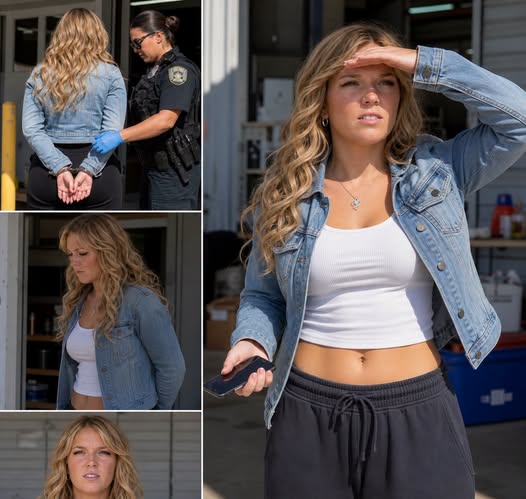
The first scream pierced the air before anyone even had time to hit “record.”
Within seconds, the square transformed into a forest of raised phones. Dozens of cameras pointed toward one person’s worst moment, capturing every second as if it were a show made for an audience. What began as a brief disturbance ended with police bringing the situation under control on the ground—but online, that was only the beginning.
The footage spread faster than the truth ever could.
Commenters picked sides. Motives were invented. Judgments were handed down. And a stranger—someone most viewers knew nothing about—was dissected, condemned, defended, and ridiculed by thousands of people who had never stood in that square.
What happened that day now exists far beyond the place where it happened. It has been replayed across feeds, clipped into short videos, slowed down, zoomed in, and stitched into endless reactions by people who were never there. A disturbance that ended without injury has been transformed into permanent digital content—one frozen moment repeatedly examined by millions who may see only a few seconds of a much larger story.
The law may have treated it as a minor disruption.
The internet turned it into a trial.
Suddenly, that single incident became a debate about morality, mental health, policing, parenting, public behavior, and everything people believe is “wrong with society.” Everyone had an opinion. Everyone had a verdict. And almost no one had the full story.
Caught between those two realities is a human being whose worst day has become a permanent exhibit in the museum of public outrage.
And perhaps that is the most uncomfortable part of all.
When we raise our phones and press record, are we protecting the public—or putting a stranger on trial?
In an age where almost every moment can become content, the distance between witnessing something and exploiting it has become dangerously small. We tell ourselves that filming keeps people accountable. Sometimes it does. But sometimes, we are simply turning someone else’s pain into entertainment.
Until we learn to pause before we post, our public spaces will continue to double as stages—and our instinct to film first and think later will keep turning ordinary human fractures into permanent digital scars.