
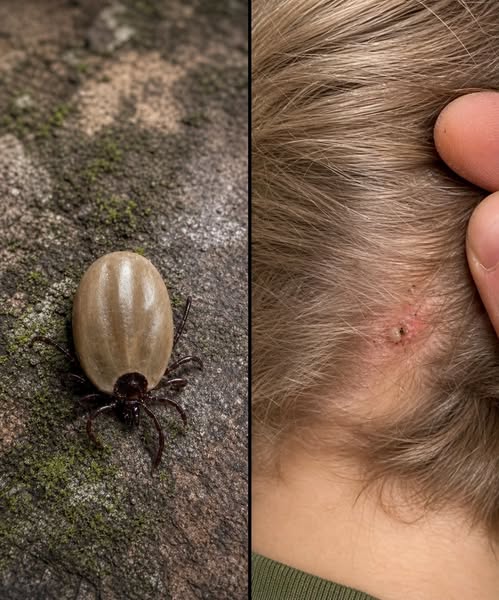
You Found a Tick on Your Child. Take a Breath. You Have a Plan.
Finding a tick on your child can feel like a horror movie unfolding in slow motion. Your mind races instantly—What if it’s Lyme disease? What if my child gets sick? What if I missed something? You see that tiny creature attached to your child and, for a moment, it can feel as though the worst has already happened.
But it hasn’t. And panic is not the plan.
What you do in the next few minutes matters far more than the frightening thoughts racing through your head. Stay calm. Remove the tick carefully with fine-tipped tweezers, clean the bite area, and make a note of when and where the exposure happened. If possible, take a clear photo of the tick before or after removal. These simple steps can turn a frightening moment into something much more manageable—and give your child’s healthcare professional useful information if questions arise later.
After the Tick Is Gone, Stay Alert—Not Afraid
The next few days are about awareness, not constant worry.
A small red bump immediately after a tick is removed is often simply a local reaction to the bite or irritation. What deserves closer attention is a rash that continues to expand or change, or symptoms such as fever, unusual tiredness, headache, weakness, or behavior that seems noticeably different from your child’s normal self.
You don’t have to assume the worst. But you also shouldn’t dismiss it if your child seems genuinely unwell.
The goal isn’t to live in fear of ticks. It’s to know what to do when you encounter one.
Calm removal. Careful observation. Good communication with a healthcare professional when needed. And practical steps to prevent future bites.
Because when it comes to protecting your child, knowledge and preparation are far more powerful than fear.