
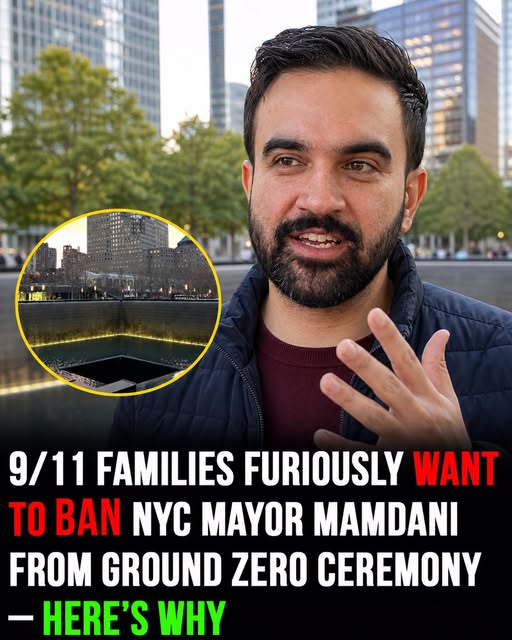
Some 9/11 families are done staying silent.
What was supposed to be a solemn day of remembrance is now at the center of a fierce political and emotional confrontation.
At Ground Zero, some families are preparing to deliver a message without saying a word: they plan to turn their backs on New York Mayor Zohran Mamdani.
A petition calling for Mamdani to stay away from the memorial has reportedly gathered nearly 98,000 signatures. Organizers say his past statements, political associations, and appointments have crossed a moral line—and that his presence at the site would feel like a betrayal of the people whose names are remembered there.
But another group of grieving families sees the campaign very differently.
They accuse the petition effort of veering into Islamophobic suspicion and political cruelty, warning that Ground Zero should never become a stage for settling ideological battles. For them, opposing Mamdani’s politics is one thing; questioning his belonging at a memorial because of his background is another.
And now, the divide is becoming impossible to ignore.
Some families may turn away. Others may welcome the mayor. Some simply wish politicians would leave the spotlight behind and allow the memorial to remain what it was always meant to be—a place for the dead, the grieving, and the memories that never disappeared.
But beneath the petitions, protests, and political arguments lies something far more painful.
Every family arriving at Ground Zero carries a different memory of September 11. Every name on those walls represents a life that cannot be restored.
And when the ceremony begins, no matter which side they stand on, they will all be standing in the shadow of the same tragedy.
The question now is not simply whether Mamdani should be there. It is who has the right to decide what Ground Zero should mean—and who gets to speak for the dead.