
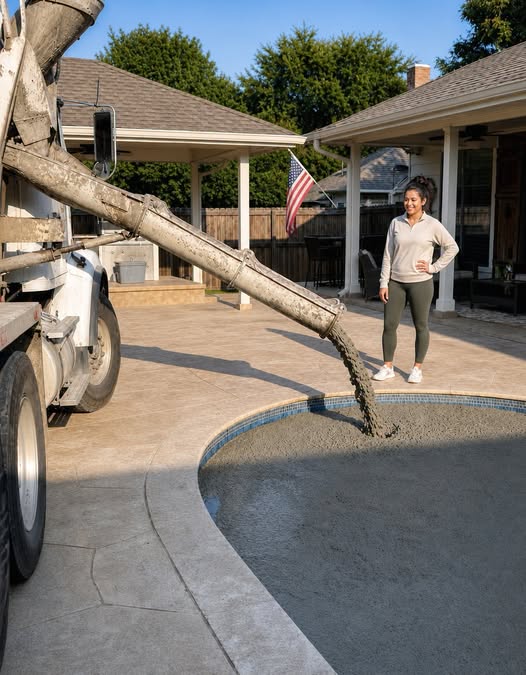
The crack in the pool wasn’t the only thing breaking that day.
Something inside the family was cracking, too.
For years, the pool had been their gathering place—the backdrop to childhood summers, midnight conversations, birthday celebrations, and countless memories. Then, almost overnight, a long, ugly fracture appeared across the concrete. What had once brought everyone together suddenly became the reason they were pulling apart.
Accusations hovered in the air. Old frustrations resurfaced. Voices nearly erupted.
But then, someone made a different choice.
Instead of pointing fingers, they slowed down.
They photographed every crack. They recorded dates and timelines. They saved messages, collected repair estimates, and spoke with professionals. Every detail was documented—not to build a case against one another, but to separate facts from assumptions.
And slowly, the anger began to lose its grip.
Once the facts were on the table, they could finally have the conversation they had been avoiding. Then came an apology.
It wasn’t polished. It wasn’t dramatic. It didn’t erase everything that had happened.
But it was honest.
Responsibility was acknowledged, and somehow, that simple act began to soften the tension that had been building between them.
From there came practical steps: insurance discussions, professional assessments, repair options, and a plan to move forward.
When the pool was finally restored, the family realized they hadn’t simply repaired damaged concrete.
They had repaired something far more important.
They had chosen understanding over accusation, facts over assumptions, and healing over the need to win.
The water eventually became clear again, reflecting a brand-new surface beneath it.
But what mattered most was what that water reflected back:
A family that had nearly broken apart—and chose, instead, to rebuild together.