
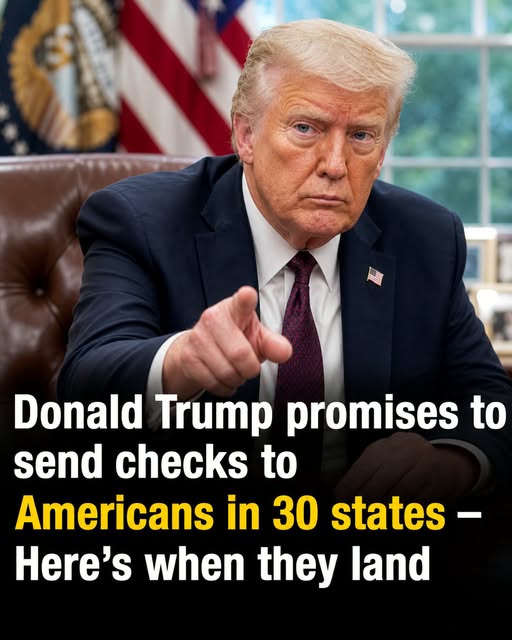
A $500 check could soon be landing in the mailboxes of nearly one million Americans—and the timing has Washington buzzing.
President Donald Trump’s newly announced “Working Families Obamacare Refunds” promise has caught millions off guard, with supporters hailing it as long-overdue relief and critics accusing the White House of turning taxpayer frustration into an election-year weapon. Across roughly 30 states, eligible Americans could reportedly see the money arrive in October—just weeks before voters head to the polls for the midterm elections.
But behind the promise of a refund lies a much bigger political battle: Who is really paying for it, and what does Trump want voters to see when that check arrives?
Trump has framed the proposal as a correction for what he describes as unfair Obamacare “user fees” that helped drive up insurance premiums during the Biden era. Rather than presenting the payments simply as government assistance, his message casts them as money being returned to working families who were allegedly forced to pay more than they should have.
The proposed refunds are aimed at a relatively narrow group—Americans who purchased health insurance through the federal exchange without receiving subsidies. That makes the initiative especially targeted, positioning these consumers as a forgotten segment of the middle class finally receiving compensation.
But the calendar has made the announcement impossible to ignore.
The checks are expected in October, immediately ahead of the midterm elections, while Trump is also promoting much larger—and far more uncertain—ideas, including a potential $2,000 tariff-related payment and a proposed $5,000 “Trump Dividend.”
For Trump’s supporters, the $500 refund represents something simple: a president standing up to insurance companies, government bureaucracy, and policies they believe have burdened ordinary families for years.
For critics, however, the timing tells a different story. They see an administration transforming economic frustration into political momentum, delivering a highly visible financial benefit just as voters prepare to decide who controls Congress.
Either way, one thing is clear: this isn’t just about a $500 check. It’s about what that check represents—and whether voters will see it as relief, repayment, or an election-year message arriving right on cue.