
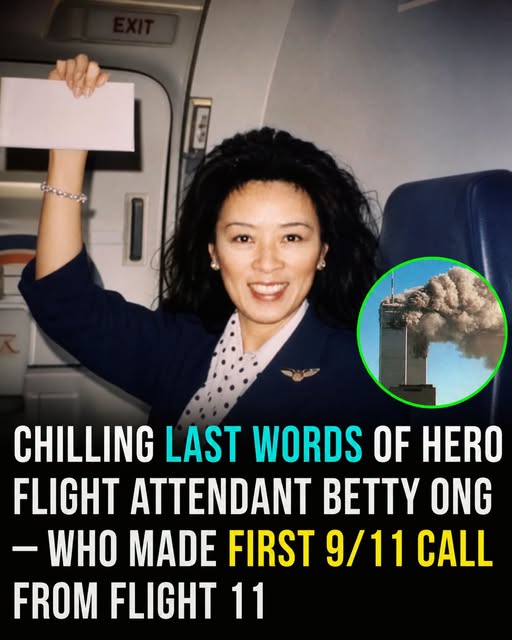
Betty Ong’s voice became one of the last threads connecting the world to the unimaginable horror unfolding aboard Flight 11.
She wasn’t even supposed to be on that flight. Yet when terror seized the cabin, Betty reached for the phone—not to scream, not to panic, but to report what she was seeing with remarkable clarity. She described the bloodshed, the effects of the gas, the locked cockpit, and the terrifying reality that something was terribly wrong.
As chaos consumed the aircraft, Betty remained focused. Her voice was calm, professional, and painfully human. She knew the danger was real. She knew she might not make it home. But instead of thinking only of herself, she kept communicating, giving people on the ground critical information about what was happening in the sky.
Those calls became part of the first understanding of the attacks and helped authorities grasp the unprecedented crisis unfolding across the country. In a moment when fear could have silenced anyone, Betty chose to speak.
To the world, she became a symbol of courage.
But to her family, she was never a symbol. She was simply “Bee”—a beloved sister and daughter, a woman who had a life, a family, and a future waiting for her.
Her family called her phone again and again, hoping against hope that somehow she would answer. Instead, they were left with an unbearable silence.
Years later, the discovery of a single bone gave her family a painful fragment of closure. She had, in the most heartbreaking sense, finally come home—but the daughter and sister they had been waiting for would never walk through the door.
And then there were her final words: “Pray for us.”
More than two decades later, those words still carry the weight of that morning—a quiet plea from a woman trapped in unimaginable circumstances, remembered by millions who refuse to let her courage disappear into history.