
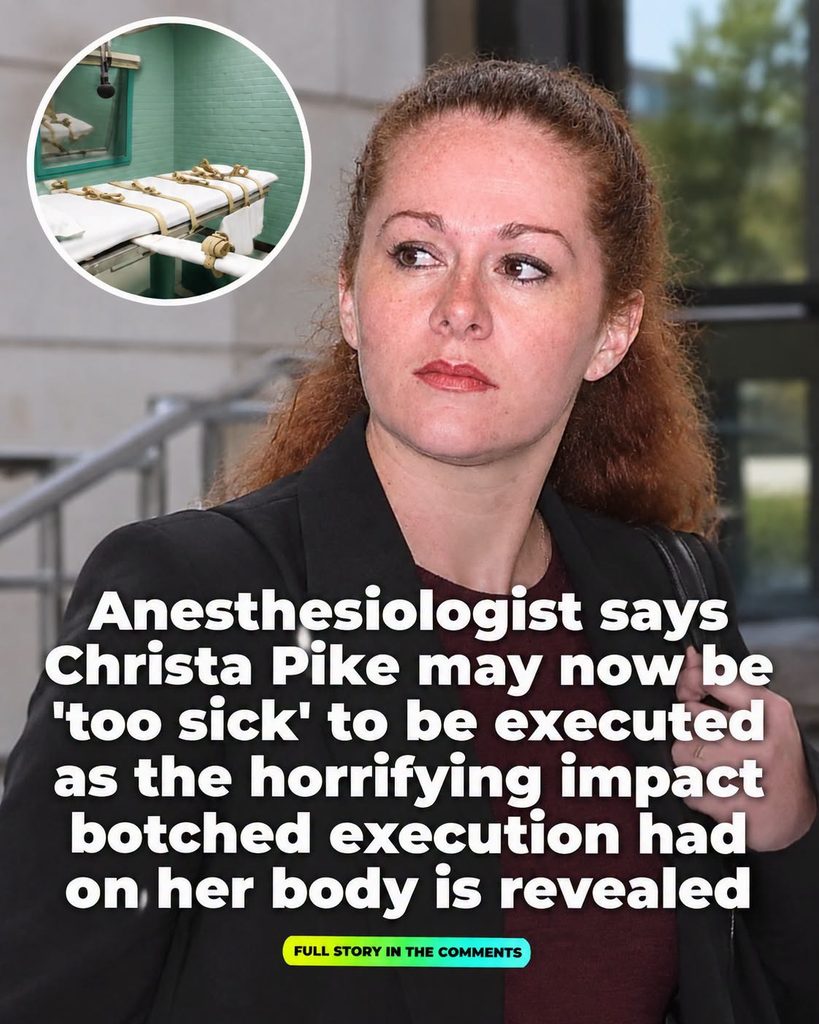
Tennessee’s execution chamber turned into a medical crisis. What was supposed to be the final moments of Christa Pike’s execution reportedly became a chaotic struggle when medical staff failed to establish reliable intravenous access. After two alleged attempts to administer lethal-injection drugs, Pike was taken to an outside hospital—leaving disturbing questions about what happened behind the execution-chamber doors.
According to the report, Tennessee halted Pike’s September 30 execution after staff reportedly made repeated attempts to insert an IV. Her attorney, Randy Spivey, described multiple needle insertions and blistering on her arms. Corrections officials confirmed that Pike was transferred to an outside medical facility, while Governor Bill Lee reportedly suspended executions through the end of the year as officials review what went wrong.
But the most unsettling questions may concern the drugs themselves.
Dr. Joel Zivot, an Emory University anesthesiology professor and outspoken opponent of capital punishment, told The Sun that the execution drugs may have entered tissue surrounding a vein instead of reaching Pike’s bloodstream. He warned that such an injury could potentially require significant medical treatment and suggested it might create complications for any future execution attempt.
Still, that assessment is medical opinion—not a confirmed diagnosis or legal ruling. The report does not establish that Pike has suffered permanent damage or that she has received a permanent reprieve. Her medical condition, the findings of the independent review, and any future court decisions could ultimately determine what happens next.
For now, an execution that was expected to end Pike’s life has instead opened a new chapter of medical, legal, and ethical questions—and the final outcome remains uncertain.