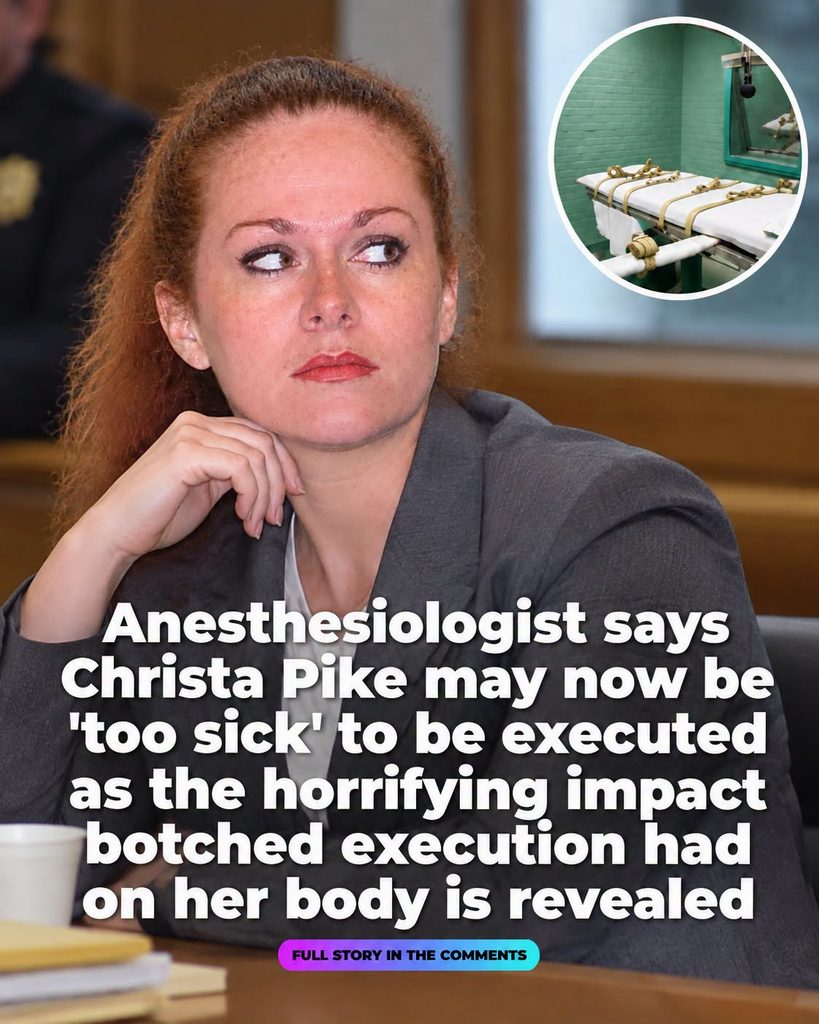
Tennessee’s execution chamber reportedly turned into a medical emergency when Christa Pike’s scheduled execution was halted after officials struggled to establish intravenous access. What followed was a frantic medical response, leaving disturbing questions about what happened to Pike while she was strapped to the execution gurney—and whether her condition could make another attempt even more complicated.
According to the report, Pike’s September 30 execution was stopped after repeated attempts to place an IV. Her attorney, Randy Spivey, said needles were inserted multiple times and that blistering appeared on her arms. Corrections officials confirmed that Pike was transported to an outside medical facility for treatment. Governor Bill Lee then reportedly suspended executions through the end of the year while an independent review examines what went wrong.
The case has drawn even more attention because of comments from Dr. Joel Zivot, an Emory University anesthesiology professor and outspoken opponent of the death penalty. Speaking to The Sun, Zivot suggested that some of the execution drugs may have entered tissue surrounding the vein instead of reaching the bloodstream. He warned that such an event could potentially require significant medical treatment and might leave lasting complications.
But one crucial question remains unanswered: Could Pike’s medical condition actually prevent Tennessee from trying again?
At this point, that remains uncertain. Zivot’s comments represent a medical assessment—not a confirmed diagnosis, court ruling, or permanent reprieve. Pike’s recovery, the findings of the independent review, and any future legal decisions could ultimately determine what happens next.
For now, the failed execution has placed Tennessee’s death-penalty procedures under intense scrutiny—and left a case that was supposed to end in the execution chamber facing a very different and deeply unsettling next chapter.