
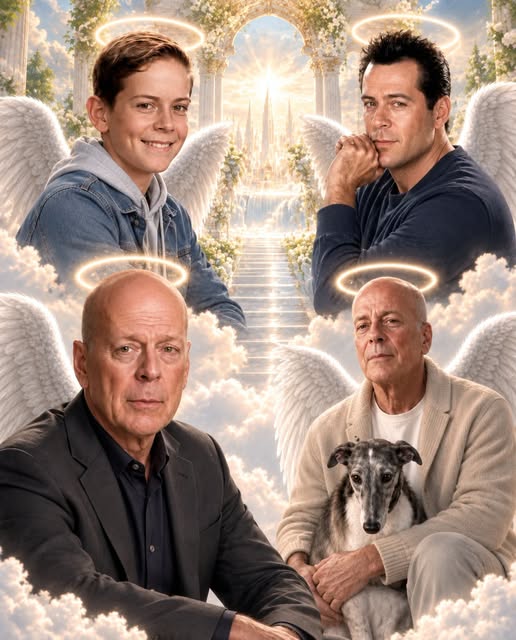
The fall of a legend is never quiet.
For decades, Bruce Willis wasn’t simply an action star — he was the everyman who made heroism feel human. He bled, stumbled, joked, doubted, and kept moving forward when everything seemed impossible.
His most iconic role may have been John McClane, but his greatest performance was something far more universal: the fragile human being behind the hero.
Willis changed the way audiences understood the action hero. As McClane, he wasn’t invincible or fearless. He was bruised, exhausted, terrified — and still willing to stand up and fight. That vulnerability became his signature. And beyond Die Hard, he showed remarkable range in films such as Pulp Fiction, The Sixth Sense, and Unbreakable, proving that sometimes a quiet look could say more than a perfectly delivered one-liner.
Then came a heartbreaking change in the story.
His family first shared that he had been diagnosed with aphasia, and later announced his diagnosis of frontotemporal dementia (FTD). The news gave new meaning to his absence from the spotlight and reminded the world that even the heroes we watched on screen are, ultimately, human.
But Bruce Willis’s legacy is not defined by illness.
It lives in the characters he created, the laughter he sparked, the tension he carried, and the countless moments when audiences watched him get knocked down — only to get back up.
Bruce Willis didn’t make heroes feel invincible. He made them feel human.
And perhaps that is why, long after the explosions fade and the credits roll, his greatest legacy will remain: the belief that courage isn’t about never being afraid. It’s about finding a reason to keep going.