
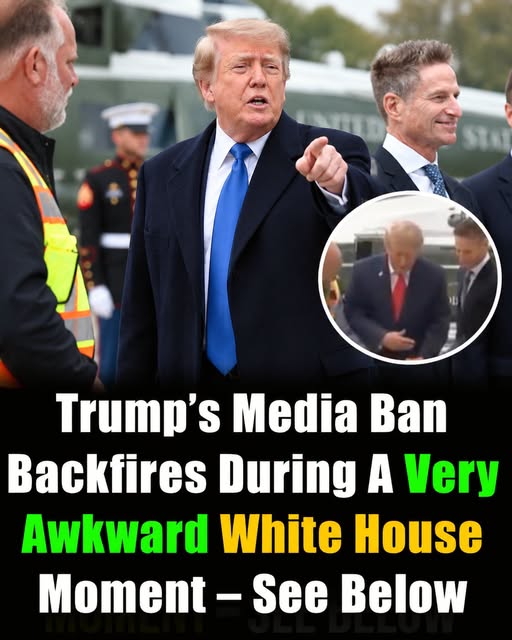
The cameras were rolling. The president was speaking. But America heard almost nothing.
In a striking moment on the White House lawn, one of Donald Trump’s most aggressive confrontations with the press appeared to boomerang in real time. Television networks stepped back. Microphones vanished. A helicopter roared overhead. And suddenly, the most powerful man in the country was speaking into what looked like a void.
Trump’s decision to bar CNN, MS NOW and Politico from the White House was intended to project strength. Instead, the move created an extraordinary visual: a president surrounded by cameras, yet seemingly deprived of the media machinery that normally carries his words to millions.
When the television pool declined to simply replace CNN and instead collectively stepped back, a private Washington dispute became a spectacle visible to the public. The message was unmistakable: access to the White House press room could be controlled, but the broader press corps could also choose how it responded.
That silent helipad moment captured the larger stakes of the lawsuit now heading to federal court. The central question goes beyond where journalists are allowed to stand. It raises a fundamental issue about presidential control of press access: Can a president restrict or remove access in response to critical coverage?
Previous administrations have pushed against the boundaries of press access, but news organizations have often maintained established practices for preserving coverage. This time, Trump’s broader restrictions have brought that long-standing tension into sharper focus.
And for a moment on the White House lawn, the consequences were impossible to miss: the cameras were there, the president was talking — but the usual amplification was gone.