
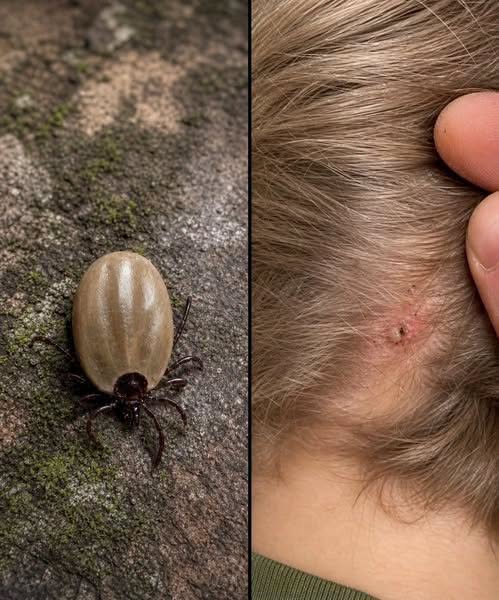
One Tiny Tick Can Trigger Every Parent’s Worst Fear—But Knowing What to Do Next Can Make All the Difference
A tiny tick attached to your child’s skin can turn an ordinary day into a moment of panic. Suddenly, every second feels critical, and frightening questions race through your mind. Could it carry a dangerous disease? How quickly should it be removed? And what warning signs should you never ignore? Before fear takes over, knowing the right steps can help protect your child and prevent unnecessary mistakes.
Finding a tick attached to your child can be alarming, but most tick bites do not lead to serious illness. The first priority is to remove the tick correctly. Using fine-tipped tweezers, grasp it as close to the skin as possible and pull upward with steady, even pressure. Never twist, jerk, burn the tick, or attempt to suffocate it with petroleum jelly. Once it is removed, thoroughly clean the bite area and your hands with soap and water.
If possible, take a photo of the tick and make a note of when and where your child may have been exposed. Try to estimate how long it was attached, since that information can help a healthcare professional assess the risk.
But the next step may be just as important: watch for changes in your child’s health over the following weeks. An expanding rash, fever, headache, unusual tiredness, or other new symptoms should not be ignored. A small bump immediately after removal may simply be irritation, and Lyme disease does not always produce the familiar bull’s-eye rash.
Contact your child’s healthcare provider promptly if symptoms develop or the tick may have posed a significant risk. In certain circumstances, preventive antibiotics may be recommended, and eligibility should be assessed quickly—ideally within 72 hours after tick removal when considering Lyme disease prevention. Seek emergency medical care if your child develops difficulty breathing or new weakness.
A tick bite can be frightening, but panic does not have to control the moment. Careful removal, close observation, and timely medical advice are the steps that matter most. When it comes to protecting your child, knowing what to do is far more powerful than giving in to fear.