
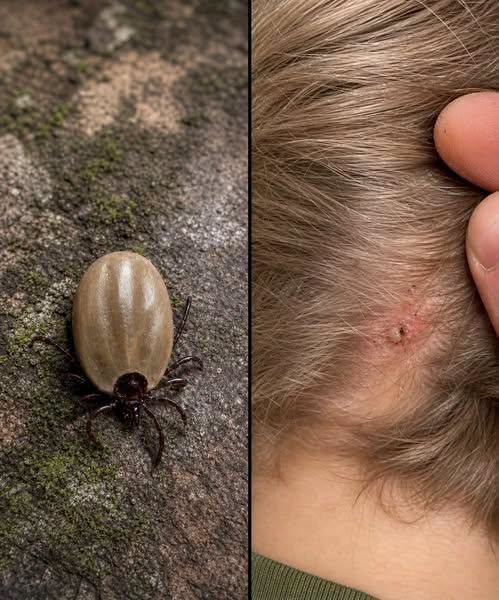
A Tick on Your Child’s Skin Can Trigger Fear—Here’s What Every Parent Should Know
Finding a tick attached to your child’s skin can turn an ordinary day into a frightening moment. Your mind may immediately race toward the worst possibilities. But before panic takes over, remember this: knowing how to remove the tick safely and recognizing the warning signs afterward can make all the difference.
Most tick bites do not lead to serious illness, but taking the right steps early is essential.
If you discover a tick attached to your child’s skin, use fine-tipped tweezers to grasp it as close to the skin as possible. Pull straight upward with steady, even pressure until the tick comes free. Avoid twisting, jerking, burning the tick, or applying petroleum jelly to force it to detach. Once removed, wash the bite area and your hands thoroughly with soap and water.
If possible, take a clear photograph of the tick and make a note of when and where your child may have encountered it. Estimating how long the tick was attached can also help a healthcare professional assess the risk.
But removing the tick is only the beginning.
Over the next several weeks, watch your child closely for symptoms such as an expanding rash, fever, headache, unusual tiredness, or other new signs of illness. A small bump immediately after a bite may simply be local irritation, and the absence of a classic bull’s-eye rash does not rule out Lyme disease.
Contact your child’s healthcare professional promptly if symptoms develop or the bite may carry a high risk of infection. In certain circumstances, preventive antibiotics may be recommended, but eligibility depends on the type of tick, the exposure, and other clinical factors. When appropriate, preventive treatment for Lyme disease is generally considered within 72 hours after tick removal.
If your child develops difficulty breathing or sudden, new weakness, seek emergency medical care immediately.
A tick bite can be unsettling, especially when it involves someone you love. But fear does not have to guide your next move. Remove the tick correctly, monitor your child carefully, and seek medical advice when needed. Staying calm, informed, and prepared is one of the best ways to protect your child’s health.