
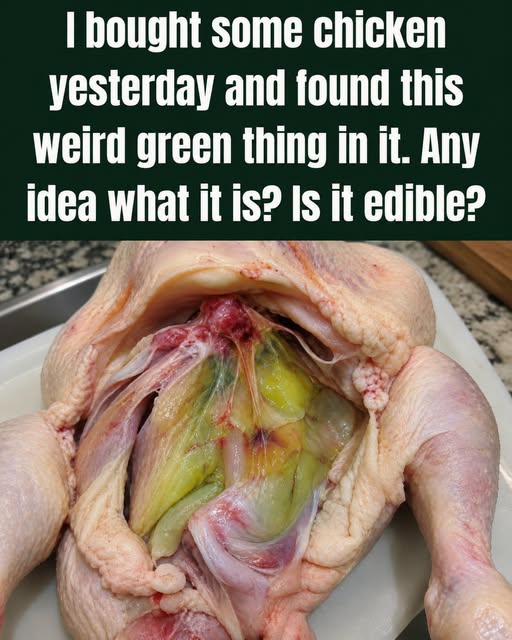
You slice into what looks like a perfectly roasted chicken breast… and suddenly, there it is: green meat.
Your stomach drops. Your brain immediately screams, “Poison!” Your nose moves closer for a second sniff, while your fork hangs frozen in mid-air.
Is this dinner… or danger?
Green chicken flesh can look horrifying, but the color doesn’t always mean the meat has gone bad. In some cases, it can be caused by bruising or a condition known as Green Muscle Disease, which can occur in fast-growing chickens. The bird’s heavily worked inner breast muscles can become damaged and die, producing a greenish discoloration beneath meat that may otherwise look completely normal.
If the chicken is fresh, has no unusual odor or slimy texture, and is properly cooked to 165°F (74°C), the green color alone doesn’t necessarily mean it’s unsafe. Still, the strange appearance and altered texture can be enough to make anyone lose their appetite.
But here’s where you should pay attention.
If that green color comes with a sour or sulfur-like smell, slime, stickiness, or unusually mushy flesh, that’s a very different story. Those are warning signs of spoilage and possible bacterial growth. Cooking spoiled chicken isn’t a reliable way to make it safe.
So if your chicken suddenly turns green, don’t panic—but don’t ignore the warning signs either.
Look at it. Smell it. Check the texture. And when something seems seriously off, don’t take the gamble.
Because sometimes that strange green color is harmless…
…and sometimes your chicken is telling you, “Don’t eat me.”