
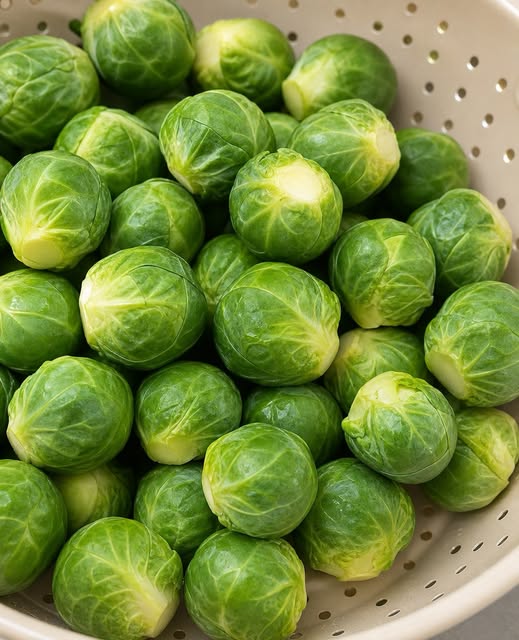
For generations, Brussels sprouts were the punchline of the dinner table—a soggy, sulfurous punishment disguised as a vegetable. They were the food children dreaded and adults politely pushed around their plates.
And yet, somehow, the same vegetable now appears on trendy restaurant menus, blistered and caramelized, piled high with crispy edges and ordered enthusiastically by people who once swore they would never eat a Brussels sprout again.
So, what changed?
Not the plant. We changed the way we cooked it.
For decades, Brussels sprouts were often ruined long before they reached the plate. Boiling them for too long amplified their strongest sulfurous notes, filling kitchens with an unmistakable smell and turning the sprouts into limp, grayish orbs. Every bite seemed to confirm what generations of children already believed: Brussels sprouts were terrible.
But the vegetable was never really the villain.
The real culprit was the cooking method.
Overboiling stripped away the texture, sweetness, and subtle flavors that make Brussels sprouts worth eating. Then came a new approach—one built around high heat, dry surfaces, and plenty of room on the pan.
Instead of steaming, the sprouts could finally brown.
Their cut edges caramelize. Their centers stay tender. And beneath that familiar bitterness emerges something deeper: a nutty, slightly sweet flavor that had been hidden all along.
Add lemon and garlic, and they become bright and aromatic. Mustard brings sharpness. Nuts add crunch. A little bacon brings richness and saltiness. Suddenly, the vegetable that once inspired dinner-table complaints becomes something genuinely craveable.
And roasting isn’t the only way to transform them. Shave Brussels sprouts raw, and they become crisp and fresh enough to anchor a salad. Steam them briefly, and they remain vibrant, tender, and firm instead of collapsing into mush.
The lesson isn’t that Brussels sprouts are magical—or that everyone must love them.
It’s simpler than that:
Sometimes, the food we hate isn’t the problem. The way we were taught to cook it is.
Give an ingredient the right treatment, and an old childhood villain can become the star of the plate.