
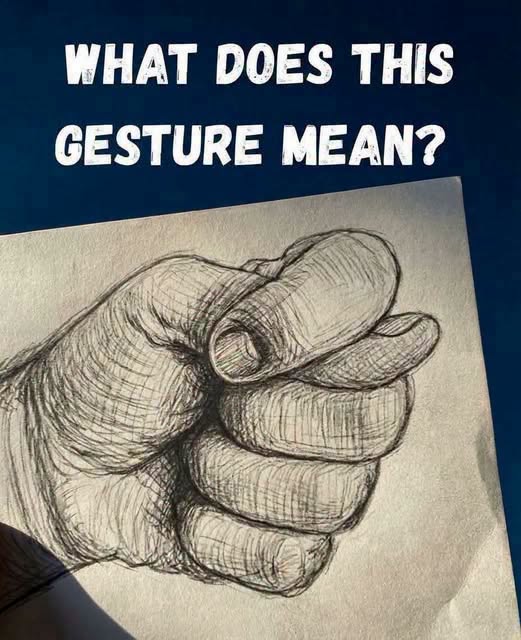
The Hidden Meaning Behind One of History’s Oldest Hand Gestures
At first glance, it looks like an ordinary clenched fist. But look a little closer, and you’ll notice one unusual detail: the thumb tucked between the index and middle fingers.
It may seem like a simple hand position, but this small gesture carries a fascinating history. Known as the fig gesture, it has appeared in different cultures and traditions, taking on meanings that range from playful defiance to symbolic protection.
Long before words could be sent across a screen, a movement as small as this could communicate an entire message. And sometimes, its meaning was far more powerful than it appeared.
When a Simple Hand Gesture Said Everything
Imagine a world without smartphones, text messages, or emojis. Communication depended on spoken words, facial expressions, and subtle movements that only those familiar with their meaning could understand.
Hand gestures played an important role in everyday life. They could express disagreement, refuse a request, make a joke, or challenge someone without turning a private disagreement into an open confrontation.
The fig gesture became one example of this fascinating form of nonverbal communication.
Depending on the culture and situation, it could be used to:
- Refuse a request without saying a word.
- Express quiet defiance when someone crossed a boundary.
- Turn an uncomfortable moment into playful humor.
- Communicate a message understood only by those familiar with the gesture.
Its greatest strength was its simplicity. One small movement could say what someone might not have dared to express aloud.
A Subtle Sign of Defiance in European History
In parts of Europe, gestures carried considerable social meaning, particularly in settings where public manners, reputation, and proper behavior mattered.
The fig gesture was sometimes used as a discreet expression of refusal or defiance. Instead of openly challenging another person, someone could make the gesture privately, communicating resistance through a movement that might go unnoticed by everyone else.
Picture a tense conversation in which one person makes an unreasonable demand. Rather than starting an argument, the other responds with a quick, almost invisible gesture.
To an outsider, nothing seems to have happened. But to someone who recognizes the sign, the message may be unmistakable.
That is what makes historical gestures so intriguing: their meaning often depended on shared cultural knowledge, social circumstances, and the relationship between the people involved.
The precise meaning of the fig gesture varied across regions and periods, so it was never simply a universal symbol of polite refusal.
More Than Defiance: A Symbol of Protection
The fig gesture also developed associations beyond everyday social interactions.
In some cultural traditions, the gesture was believed to offer protection against misfortune, envy, or the so-called evil eye. The hand itself became a symbolic barrier, representing a desire to keep unwanted influences away.
For people who believed in its protective power, making the gesture could provide reassurance during uncertain moments. It might accompany a farewell, appear during a moment of worry, or serve as a small personal ritual.
Whether viewed as superstition, cultural symbolism, or a meaningful tradition, the idea behind it was deeply human: the desire to feel protected when facing something beyond our control.
It is important to remember, however, that these beliefs were not shared by every culture, and the gesture’s meaning could differ considerably from one place to another.
How an Ancient Gesture Found Its Way Into Family Life
Not every traditional gesture carried a serious or mysterious meaning.
Over generations, some gestures became part of ordinary family interactions, passed from adults to children through jokes, playful teasing, and familiar customs.
The fig gesture could be used in a mischievous way,