
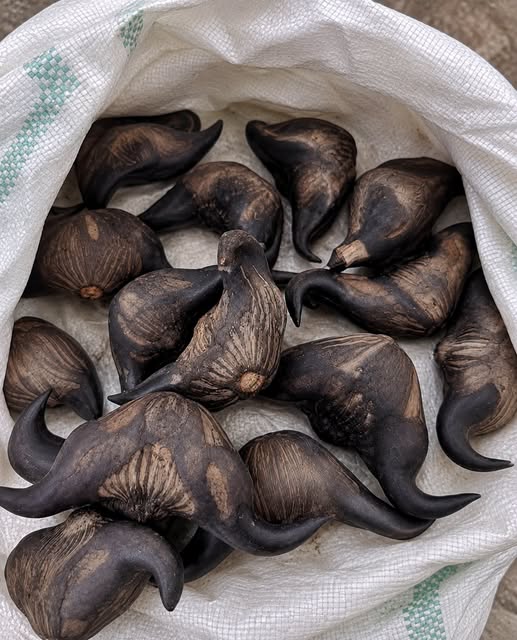
They look like weapons. Yet people eat them.
Black, spiked, and almost otherworldly, water caltrops—often called “devil’s nuts”—float quietly on ponds and slow-moving waters. Their fierce-looking shells seem designed to warn you away. But hidden beneath that armor is a soft, starchy flesh with a surprisingly familiar, chestnut-like taste.
For centuries, communities across Asia have gathered these strange aquatic fruits for food. They appear in festival treats, street snacks, and everyday dishes, transforming something that looks dangerous into something deeply comforting.
But there’s a catch.
These fruits grow in still or slow-moving water, where contamination, parasites, and harmful microorganisms can be present. A random photograph, a guess about the species, or a casual bite is not enough to make them safe. Mishandling or eating contaminated produce can lead to serious illness.
That is why traditional knowledge matters.
Knowing the correct species, understanding where it came from, handling it carefully, and cooking it properly can make the difference between a nutritious wild food and a dangerous mistake. Thorough cooking is especially important when consuming aquatic plants or fruits gathered from uncertain sources.
Perhaps that is what makes the water caltrop so fascinating: it looks like nature’s warning sign, yet it has fed generations of people.
Its lesson is simple.
Not everything strange is dangerous—and not everything edible is safe without preparation. Sometimes, nature hides nourishment behind a warning.