
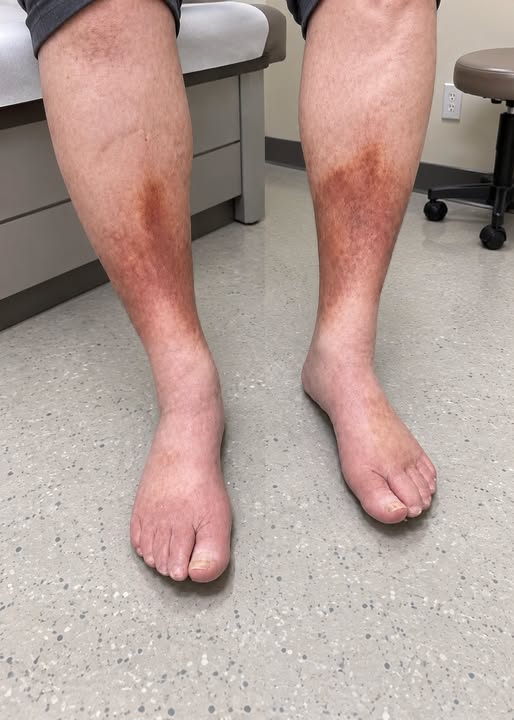
A Quiet Ankle Can Hide a Serious Warning.
What looks like “just a little swelling” may be your body trying to tell you something important.
At first, it’s easy to ignore. Your ankles look a little puffier by the evening. Your socks leave deeper marks. You tell yourself it’s because of age, extra weight, or simply spending too many hours on your feet.
But when the swelling keeps coming back—or never fully goes away—it deserves your attention.
Over time, changes in circulation can cause fluid to build up in the lower legs. The skin may become darker, thicker, or more fragile. Your legs can feel heavy, tight, or uncomfortable, and even walking may gradually become harder.
These changes aren’t always “just part of getting older.” They can be signs that something underneath the surface needs to be checked.
Pay particular attention if swelling is accompanied by warmth, redness, pain, tenderness, skin changes, or sores that refuse to heal. If one leg suddenly becomes more swollen or painful than the other, that’s especially important to take seriously.
And if leg swelling occurs with chest pain, difficulty breathing, fainting, or sudden shortness of breath, seek emergency medical care immediately.
You don’t need to panic. But you also shouldn’t keep making excuses for a change that your body keeps repeating.
Sometimes, the earliest warning is the easiest one to overlook. Listen to your body—and get persistent swelling checked by a healthcare professional.