
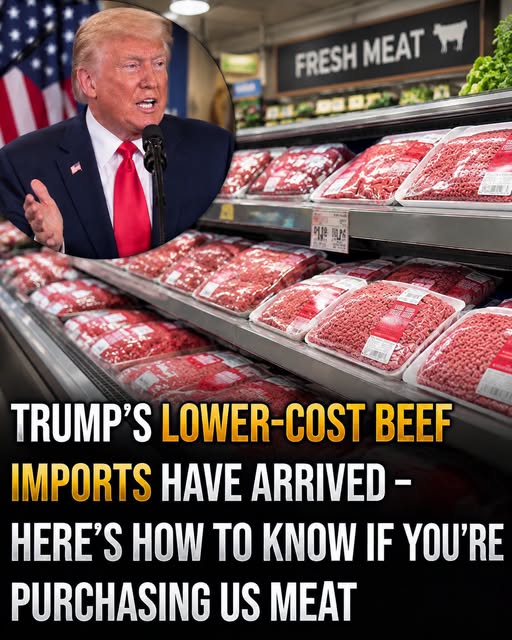
The betrayal may already be sitting inside your refrigerator.
You thought you were buying American beef.
You checked the package. You saw the familiar words: “Product of USA.”
And you trusted them.
But what if those words didn’t mean what you thought they meant?
For years, a little-known labeling loophole allowed beef from cattle born and raised outside the United States to receive a “Product of USA” label if the meat underwent certain processing on American soil.
Think about that.
An animal could spend its entire life thousands of miles away—born overseas, raised overseas, slaughtered overseas—and still end up wearing an American label after the final processing step.
For shoppers, the label could create the impression of an American-born, American-raised animal.
For struggling ranchers, the issue cuts much deeper.
American cattle producers face the costs of land, feed, labor, regulations, and raising livestock domestically. Meanwhile, imported beef can enter the U.S. market and, under the former labeling rules, potentially appear more American than its journey would suggest.
And that turns a simple package of ground beef into something much bigger:
A question of trust.
Because country-of-origin labels aren’t just about words.
They can influence whether consumers choose imported or domestic products, whether they support American ranchers, and whether they feel confident about what they’re putting on the dinner table.
When a few words on a package can hide thousands of miles of history, one question becomes impossible to ignore:
When you read “Product of USA,” do you really know where your beef came from?