
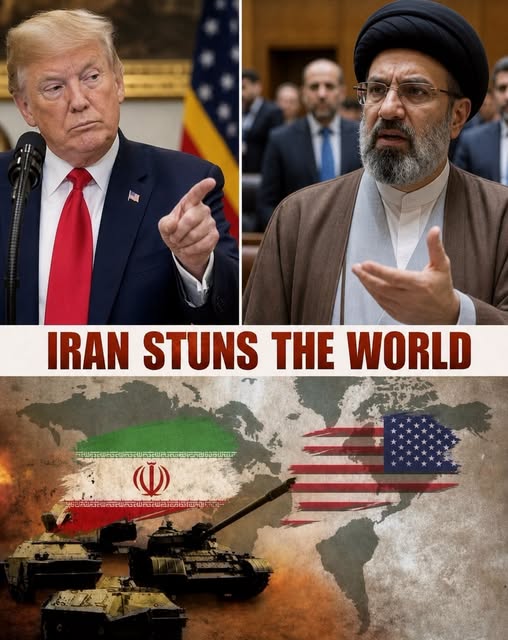
The cameras barely lingered. The words sounded cautious, almost forgettable. But behind the polite smiles, carefully choreographed handshakes, and guarded diplomatic language, something far more consequential was taking shape.
The United States and Iran were testing something neither side could afford to take lightly: trust.
Every closed-door meeting carries new risks. Every sentence is dissected. Every proposal could become the first step toward an opening—or the final reason to shut the door for another generation. Markets are watching. Allies are listening. Rivals are calculating their next move.
Beyond the familiar headlines of missiles, sanctions, and threats, a slower and far more fragile story is unfolding: two longtime adversaries are attempting to communicate without allowing decades of hostility to consume the conversation.
For Washington, the goal is framed around clarity, transparency, and rules that can be understood and enforced. For Tehran, the stakes are equally enormous: economic relief, greater regional influence, and the possibility of reconnecting with global markets without appearing to surrender its strength at home.
Meanwhile, countries such as Qatar continue working quietly behind the scenes—carrying messages, hosting discussions, and reminding both sides of what prolonged instability actually costs. Businesses suffer. Tourism slows. Workers lose opportunities. Governments are forced to spend more simply to prepare for the next crisis.
And that is why any breakthrough is unlikely to arrive with a dramatic announcement or a single historic handshake.
It may begin with something almost invisible.
A phone call returned.
A proposal that isn’t immediately rejected.
A deadline quietly extended.
A conversation that continues when everyone expected it to end.
Those seemingly insignificant moments can become the building blocks of something much larger. International organizations and diplomatic coalitions can transform temporary openings into lasting structures—agreements, inspection systems, economic frameworks, and communication channels capable of surviving political change.
The disagreements between Washington and Tehran remain deep. The mistrust is real. The history is complicated, and the possibility of failure is never far away.
But diplomacy does not require two sides to suddenly become friends.
Sometimes, it simply requires them to keep talking.
As long as those channels remain open, a narrow and uncertain path still exists—one that could move the relationship away from perpetual confrontation and toward something more stable.
And if that fragile path holds, the consequences could reach far beyond Washington and Tehran, reshaping the broader balance of security, trade, and prosperity across the Middle East—and potentially changing the strategic landscape far beyond it.