
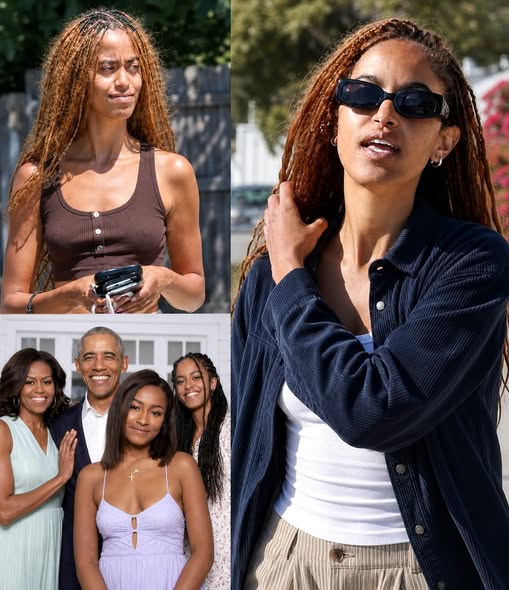
For years, Malia Obama couldn’t cross a street without becoming a headline. Every photograph was dissected, every appearance analyzed, and her identity was transformed into a public symbol long before she was old enough to vote.
But now, quietly and deliberately, she is doing something far more intriguing than stepping into politics or writing a memoir.
She is stepping behind the camera.
Trading the spotlight for the director’s chair, the weight of her surname for a creative signature, and the role of the daughter everyone watched for that of a storyteller who decides what the world gets to see.
Her choice isn’t loud. It doesn’t need to be.
It is unmistakably clear: if the world insists on watching, she wants to decide what they watch.
Malia Obama’s journey into filmmaking feels less like a conventional celebrity career move and more like a reclamation of authorship. For much of her childhood, other people controlled the narrative surrounding her. Now she is entering a world where the balance of power is different—the writer chooses what is revealed, the director determines what remains unseen, and the storyteller ultimately decides where the frame falls.
Through writers’ rooms, internships, and eventually directing her own short film, she is building something that cannot simply be inherited: craft, judgment, experience, and a voice that has to stand on its own.
Her decision to work professionally as “Malia Ann” makes that intention even more striking. It cannot erase her privilege, nor can it completely separate her from the Obama name that follows her wherever she goes. But it creates something valuable: distance.
Just enough space for audiences and collaborators to encounter the work before the legacy.
And in a culture obsessed with instant fame and instant recognition, Malia appears to be choosing the opposite path—the slower, harder road of accumulation. More scripts. More sets. More mistakes. More stories. More experience.
The transformation is subtle, but powerful.
She is no longer simply the girl inside the frame.
She is becoming the woman who decides where the frame goes next.