
The Way You Sleep Could Affect Your Acid Reflux
You might think your sleeping position is simply a matter of comfort—but for some people, it can make a noticeable difference in how they feel throughout the night.
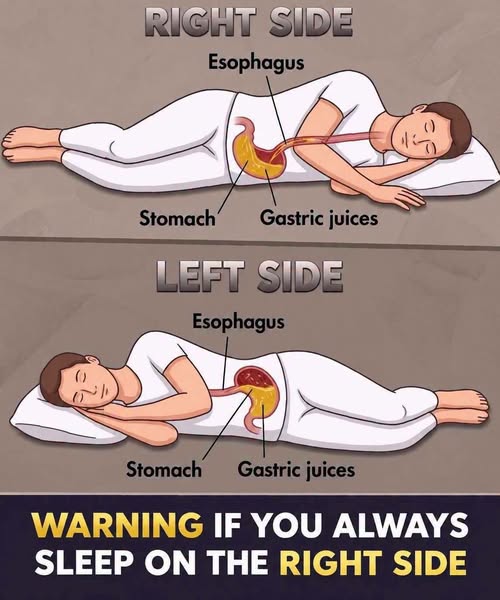
If you occasionally struggle with acid reflux, heartburn, or digestive discomfort, your sleeping position may be worth paying attention to. Sleeping on your right side is generally safe, but some people notice that reflux symptoms become more noticeable in this position, especially after eating close to bedtime.
Why does this happen?
Part of the answer comes down to the shape and position of your stomach—and gravity. When you lie down, stomach contents can sometimes move toward the esophagus more easily, increasing the chance of acid reflux.
Interestingly, sleeping on your left side may have the opposite effect. This position can help keep stomach contents lower and may reduce the amount of acid that reaches the esophagus. Some research has found that people may experience less nighttime acid exposure when sleeping on their left side.
But there’s an important point: sleeping on your right side is not automatically bad for you. Many people sleep this way comfortably without experiencing reflux at all. Your individual body, habits, and comfort level matter.
Acid reflux happens when stomach contents flow back into the esophagus. It can cause a burning sensation in the chest, a sour or acidic taste, throat irritation, or uncomfortable pressure—especially after meals.
And sometimes, the problem isn’t your sleeping position at all.
Late-night meals, large portions, certain foods and drinks, and lying down soon after eating can all make reflux more likely. Giving your body enough time to digest before going to bed may help reduce nighttime discomfort.
Simple changes can make a difference:
- Give yourself some time between dinner and bedtime.
- Avoid very large meals late at night.
- Pay attention to foods or drinks that trigger your symptoms.
- Maintain a consistent sleep routine.
- If reflux bothers you at night, consider experimenting with sleeping on your left side.
Ultimately, there is no single “perfect” sleeping position for everyone. If you sleep comfortably on your right side and experience no symptoms, there may be no reason to change.
But if nighttime heartburn or reflux keeps waking you up, trying the left side—along with adjusting your evening eating habits—may be worth considering.
And if reflux symptoms are frequent, severe, or persistent, it’s a good idea to speak with a healthcare professional rather than simply ignoring them.