
The backlash erupted almost instantly.
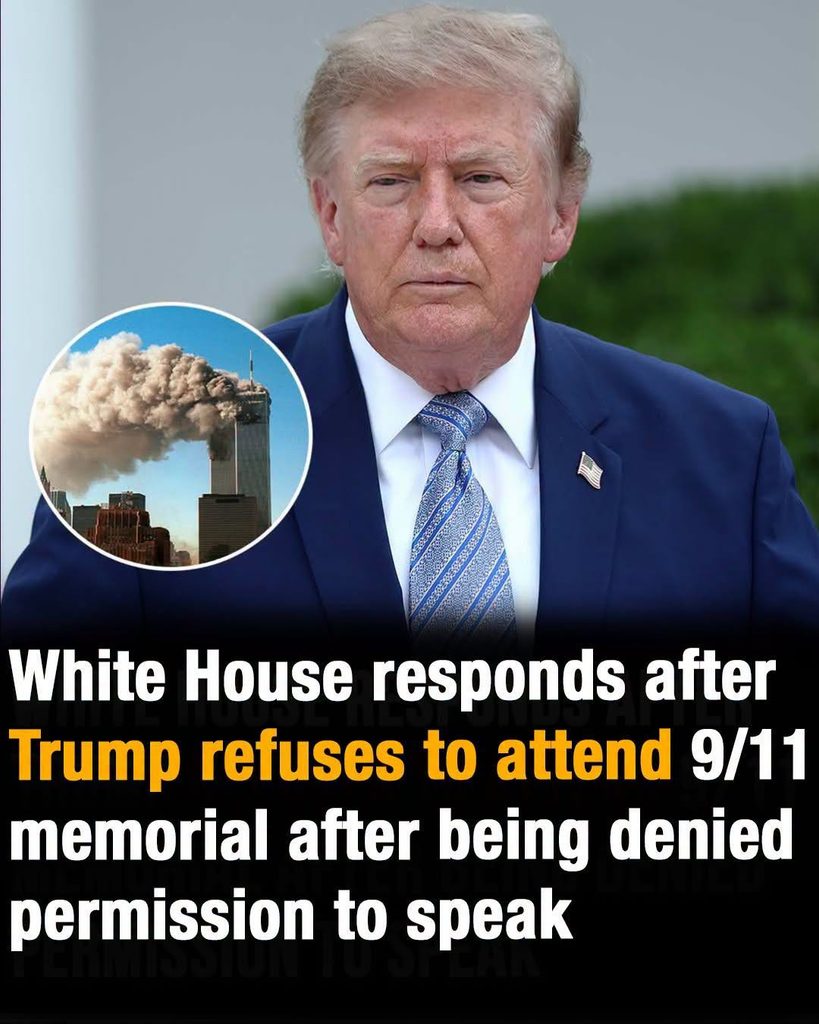
A report began circulating that Donald Trump had pulled out of the 25th-anniversary 9/11 memorial ceremony in New York because he wasn’t allowed to speak.
Within moments, the story became a political firestorm.
Organizers pointed to the ceremony’s long-standing tradition of keeping the New York observance free of political speeches. The White House pushed back. And Trump took the fight directly to social media, where he unleashed a furious response—calling the report a “total fabrication” and attacking the journalist behind it.
But beneath the outrage was a much bigger question:
What actually happened behind the scenes?
According to reports, organizers reminded the White House that the New York ceremony has followed a no-political-speeches policy since 2012—a rule intended to keep the focus where organizers believe it belongs: on the victims, grieving families, and the first responders who ran toward unimaginable danger.
Then, reportedly, plans for Trump to attend the World Trade Center observance changed.
Suddenly, the Pentagon became the center of attention, with Trump expected to deliver remarks there instead.
The White House offered a different explanation for the decision, portraying his participation as deeply personal. Trump has long described himself as a proud New Yorker and has spoken about watching the attacks unfold and remembering the lives lost that day.
But Trump’s own response was far more confrontational.
He denied ever demanding the opportunity to speak at the New York ceremony, attacked the reporting, and argued that the memorial should remain exactly what it has traditionally been:
a solemn ceremony—not a political stage.
And that may be the most revealing part of the entire controversy.
Because September 11 carries an emotional weight that goes far beyond politics. For millions of Americans, it remains a day of grief, memory, sacrifice, and remembrance.
So when politics enters that space—even through a dispute over who speaks and who doesn’t—the reaction can become explosive.
One ceremony.
One set of rules.
One furious response.
And suddenly, a day meant to remember the past became a new battle unfolding in the present.