
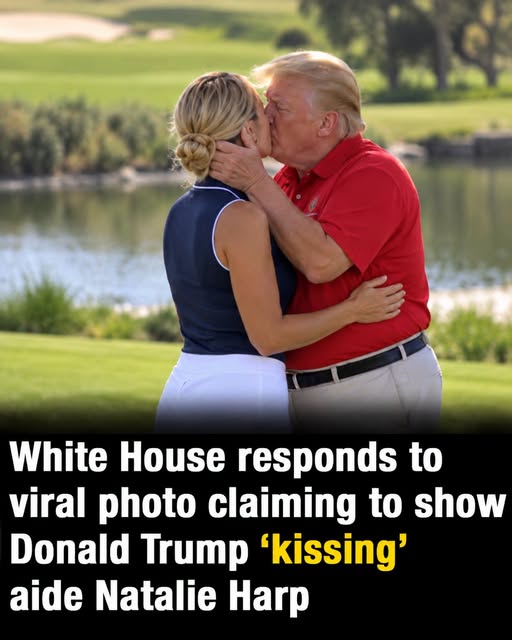
The kiss looked real. The outrage felt even more real.
Within hours, an image allegedly showing Donald Trump locked in an intimate embrace with White House aide Natalie Harp exploded across social media. Timelines were flooded. Rumors spread like wildfire. Questions about Trump’s marriage, his aide, and an alleged betrayal quickly took over the conversation.
But there was one problem: the photo was never real.
What began as a shocking viral scandal soon became something far more unsettling — a powerful reminder of just how easily artificial intelligence can blur the line between reality and fiction.
The White House swiftly dismissed the supposed golf-course kiss as a “clearly fake photo.” Analysts also pointed to obvious AI-generated inconsistencies, including a bizarre detail that was difficult to miss: Harp appeared to have six fingers on one hand.
Yet by the time the truth emerged, the image had already done its damage. Millions had seen it, reacted to it, shared it, and formed opinions before the facts could catch up.
At the center of the controversy was Natalie Harp, the Trump aide sometimes nicknamed his “human printer” because of her constant presence and reputation for quickly providing him with information. Her close proximity to Trump has attracted public curiosity for years, but claims of a romantic relationship have been denied.
Ultimately, this story may have far less to do with an alleged affair than with something much bigger — the frightening power of a fake image to create a real emotional reaction.
In an age when artificial intelligence can manufacture photographs that appear remarkably convincing, the most dangerous part may not be the fake itself.
It may be how quickly we believe it.
And sometimes, by the time the truth arrives, the lie has already traveled around the world.